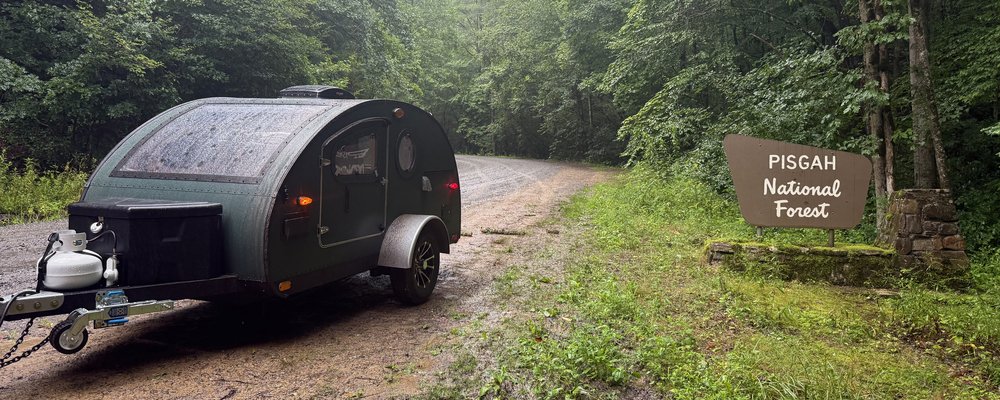
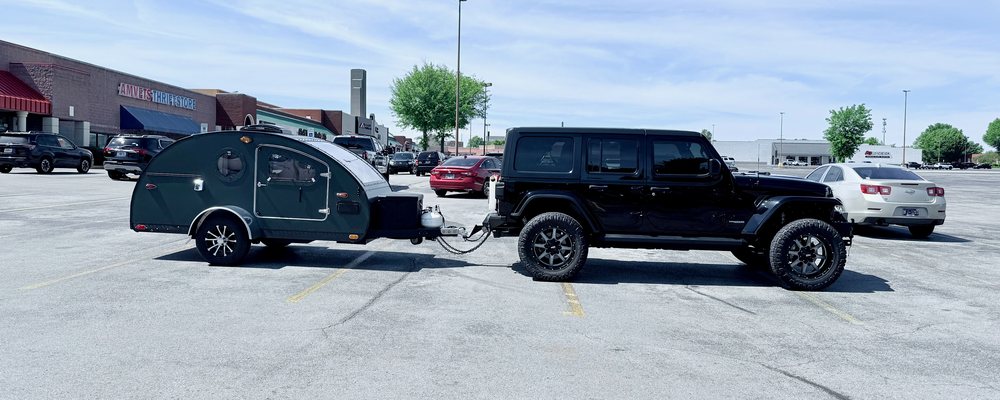
Tow Rating Is the Wrong Number.
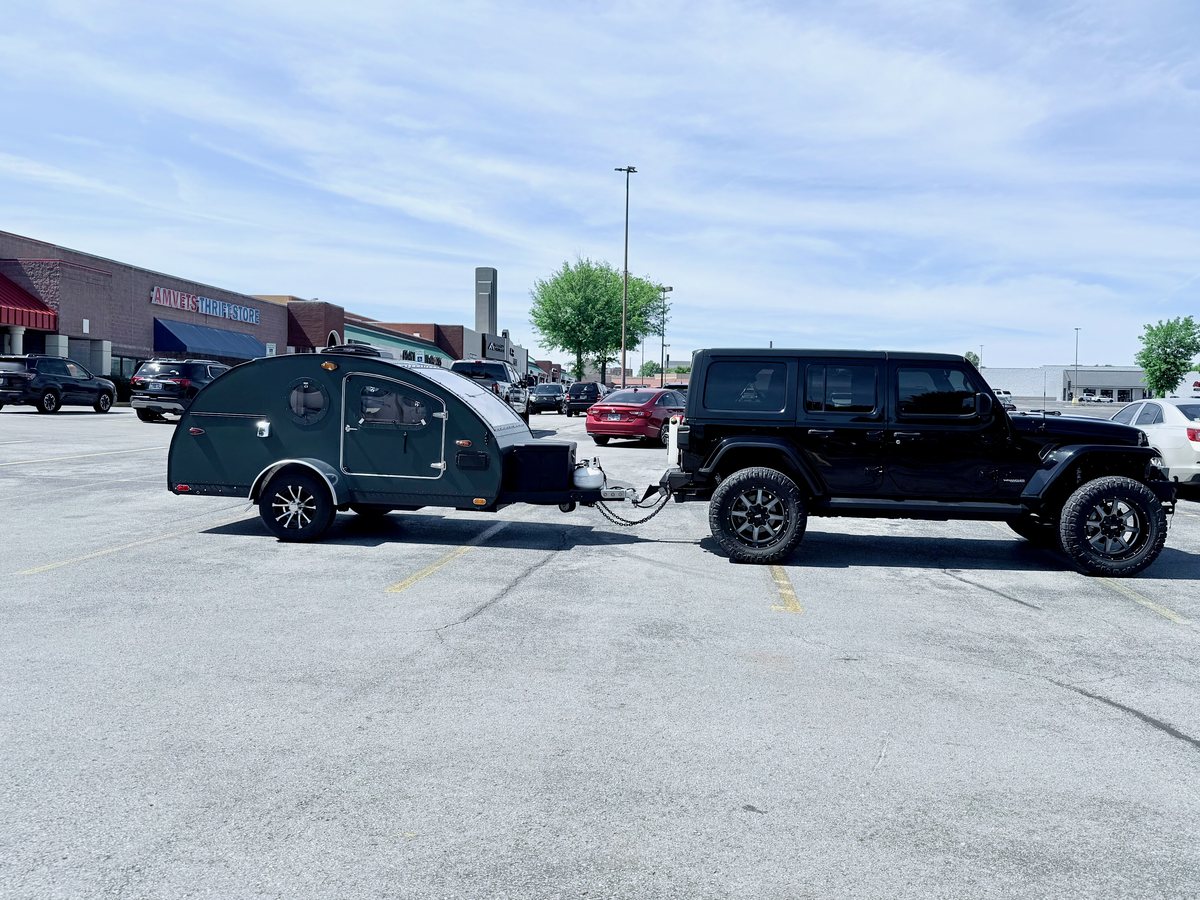
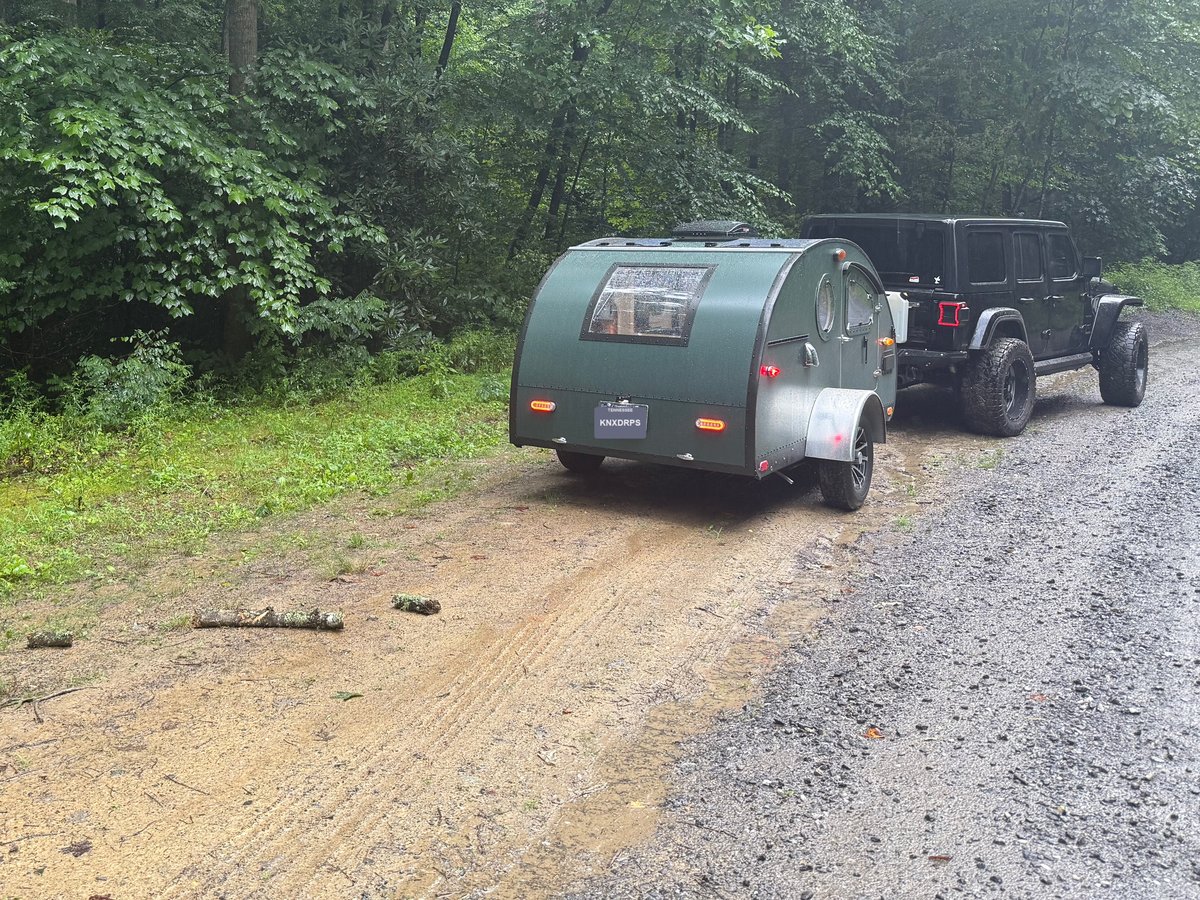
The number in the brochure is the tow rating. The number that runs out first is payload, and it's printed on a sticker in the driver's door jamb that a lot of owners have never read. My 2018 Wrangler Unlimited tows a 1,900 lb teardrop with 200 lb on the tongue and is nowhere near its tow rating. On an ordinary weekend for two, it's right at its payload, and the reason is plain arithmetic. It's the companion to the tongue weight post, from the tow vehicle's side of the hitch.
Five Numbers, One Sticker
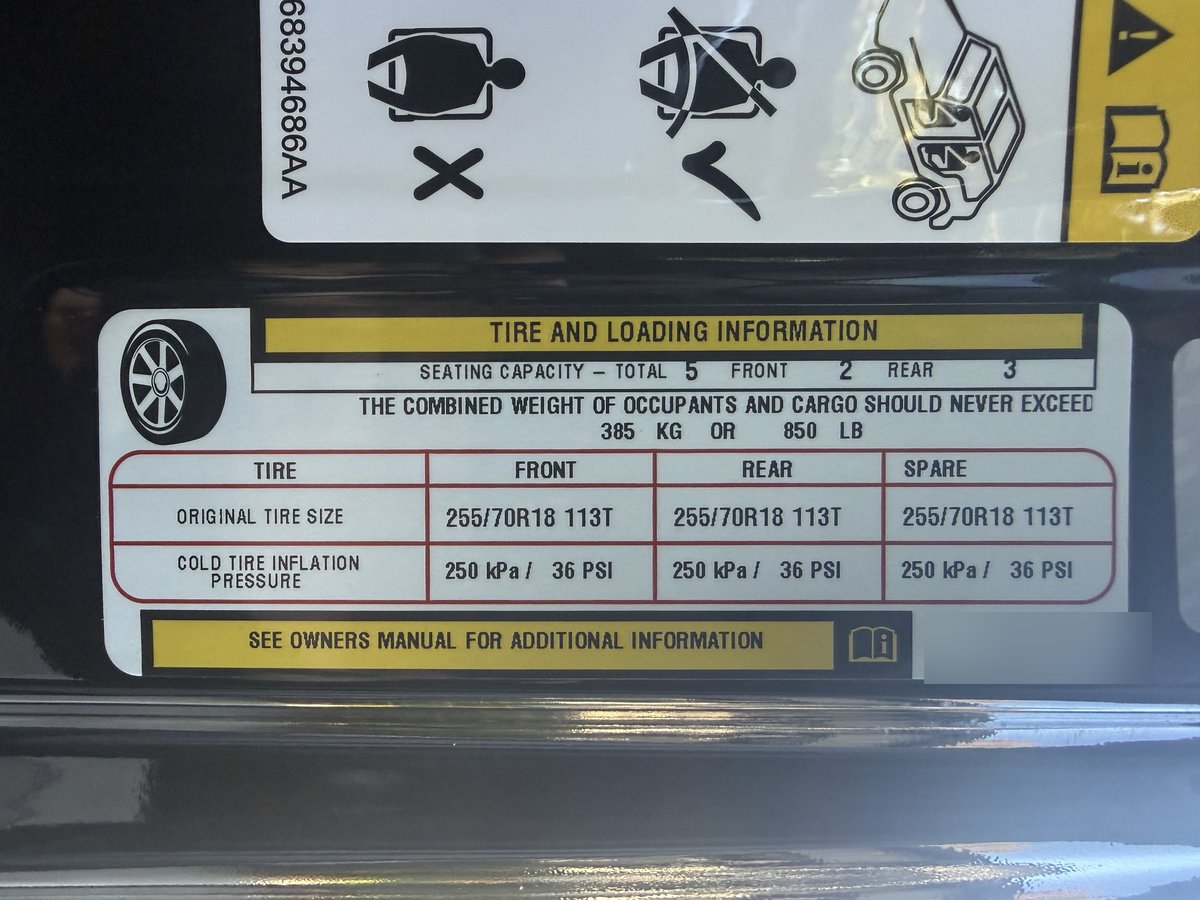
Open the driver's door and there are two labels on the jamb. One is the certification label with the GVWR and the axle ratings. The other, usually yellow and white, is the tire and loading sticker, and it has the sentence that matters: the combined weight of occupants and cargo should never exceed a figure printed right there. That figure is your payload. Not the brochure's, but yours, for that vehicle as it left the factory.
GVWR
Gross Vehicle Weight Rating. The most the vehicle is allowed to weigh with everything in and on it, including you and the tongue.
Payload
GVWR minus the vehicle's actual curb weight as built. Every factory option takes a bite out of it. It's the number on the yellow sticker.
GAWR
Gross Axle Weight Rating, front and rear. Tongue weight lands almost all on the rear one, and the rear one fills up first.
GCWR
Gross Combined Weight Rating. Tow vehicle plus trailer plus everything in both. It's in the owner's manual, not on the door.
Tow Rating
The heaviest trailer the maker allows, figured for a lightly loaded vehicle with one driver aboard. That "lightly loaded" is the catch.
Hitch Rating
The receiver, the ball mount, the ball, and the coupler each have one, and the lowest of the four is the real one.
Why the Brochure Number Is Almost Never Yours
A tow rating is worked out for a base vehicle with a driver and an empty cabin, and then the real vehicle gets built. A hardtop weighs more than a soft top. Steel bumpers, a winch, a roof rack, bigger tires and wheels, a bigger engine, the four door body itself: each one adds curb weight, and every pound of curb weight comes straight off payload. The tow rating in the brochure doesn't change, but the sticker does.
That's why a well optioned Wrangler Unlimited has less payload than people assume. It's a heavy body on a chassis with a fixed GVWR, and the options eat the difference. Mine is a Sahara with the 3.6L Pentastar V6 and the stock 3.45 axles, with the factory tow package, and the sticker reads 850 lb against a tow rating of 3,500 lb. The gap between those two numbers is the whole point of this post.
The sticker also doesn't know about anything added after the factory, and mine has had plenty added. 35 inch BFGoodrich KO3s on 20 inch Moto Metal wheels, a DV8 front bumper, a Fab Fours rear bumper, and a WARN 12,000 lb winch hanging off the front. None of that went on there to save weight, and every pound of it came out of payload before the trailer was ever hitched up.
The Tongue Is a Passenger
Tongue weight doesn't press on the trailer, it presses on the tow vehicle through the hitch, and it counts against payload the same as a person sitting on the rear bumper would. My 200 lb of tongue is a big adult riding on the back of the Jeep every trip. I measured it on a CAT scale on August 27, and the tongue weight post has the method and the ticket.
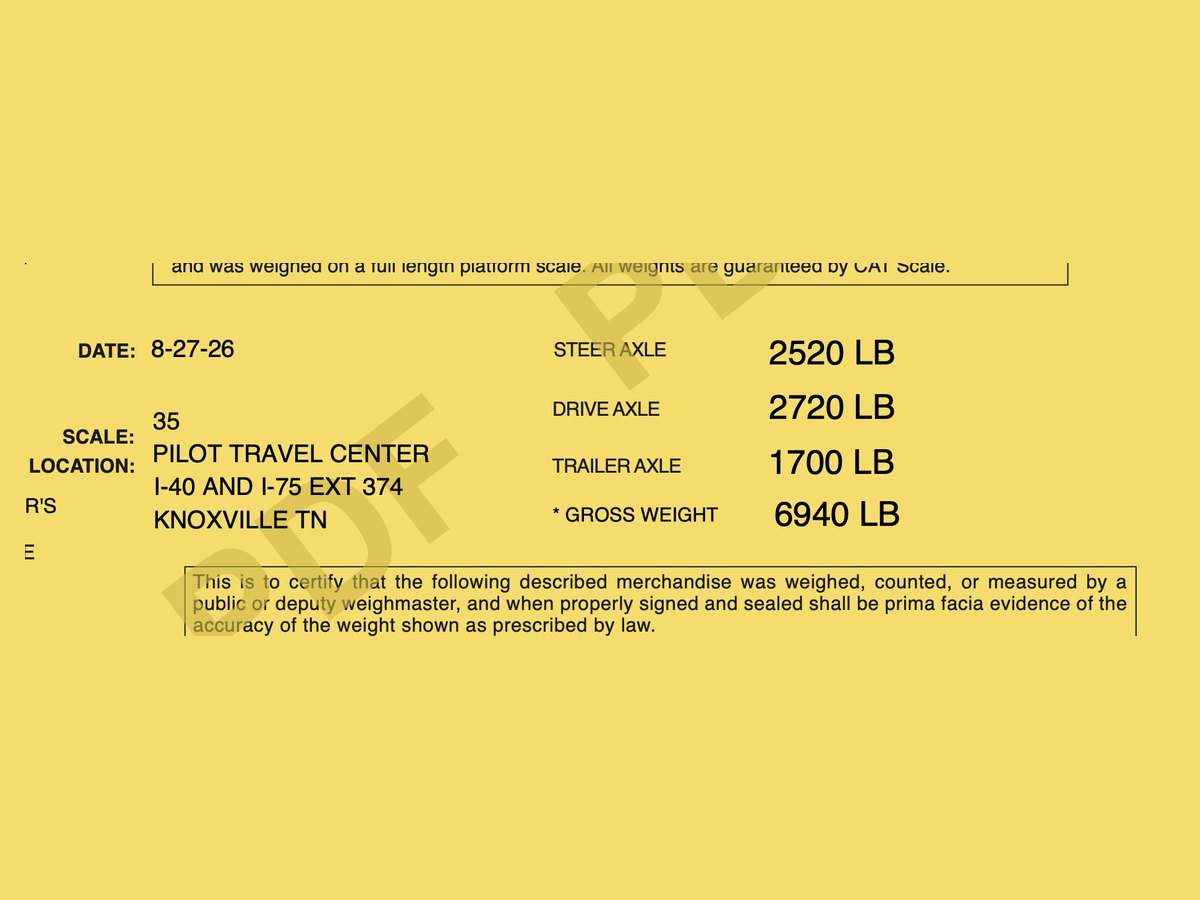
It's worse than 200 lb on the rear axle, too. The ball sits behind the rear axle, so tongue weight works as a lever, adding more than its own weight to the rear axle and lifting some off the front. The same CAT ticket shows it: hitching up put 300 lb on the Jeep's rear axle and took 100 lb off the front. On a teardrop that's not a big deal. On a heavier trailer it's the reason weight distributing hitches exist.
The Math, With My Numbers
Rather than guess what the add-ons weigh, I used the CAT scale. The Jeep alone weighed 5,040 lb with me in it and nothing else aboard. Take out my 222 lb and the Jeep as it sits today is about 4,820 lb. Against a 5,500 lb GVWR, that leaves about 680 lb of real payload, not 850.
Here's the sum for my wife and me on a weekend in the Smokies. The people and gear are round numbers. Food rides in the teardrop's galley and fridge, not the Jeep, so it's already counted in the trailer's 1,900 lb.
Notice what the trailer's 1,900 lb did to that sum: nothing, except for the 200 on the tongue. The rest of the trailer's weight sits on the trailer's own axle, which is a big argument for a teardrop over a bigger trailer behind the same tow vehicle. Notice too that an ordinary weekend for two people spends all of it, on paper about 35 lb over, which is inside the slop of the round numbers but not by much. That's without doing anything unusual. Four adults and a cooler would be well over.
The axles tell the same story. Hitched up with just me aboard, the ticket shows 2,520 lb on the front axle against a 2,700 lb rating and 2,720 lb on the rear against 3,000. That's 180 lb and 280 lb to spare, and the cargo area sits right over the rear axle.
The sticker figure assumes a full tank, so fuel doesn't count against it. The scale number counts whatever was in the tank that day.
GCWR, and Why It Isn't My Problem
The combined rating caps the tow vehicle and trailer together. On the CAT scale the whole rig came to 6,940 lb hitched and loaded, with the Jeep alone at 5,040 lb, against a GCWR of 10,836 lb. That's almost 3,900 lb to spare. It bites with a big travel trailer, not a teardrop.
So with a small trailer the limits tend to show up in this order: payload first, then the rear axle rating, then the hitch, and GCWR and tow rating last. Most people check them in just about the reverse order.
What "Half-Ton" Means, and Doesn't
Half-ton, three-quarter-ton, one-ton: those were nominal payload classes from decades ago, when a half-ton pickup carried about 1,000 lb. The names stuck and the trucks changed, so the label tells you nothing about your sticker.
A Wrangler isn't a half-ton anything. It's an SUV on a frame, and mine's 850 lb sticker is less than the old half-ton figure itself. That doesn't make it a bad tow vehicle for a teardrop. It just makes it one where the sum above is worth doing once instead of assuming.
The Receiver Has a Class
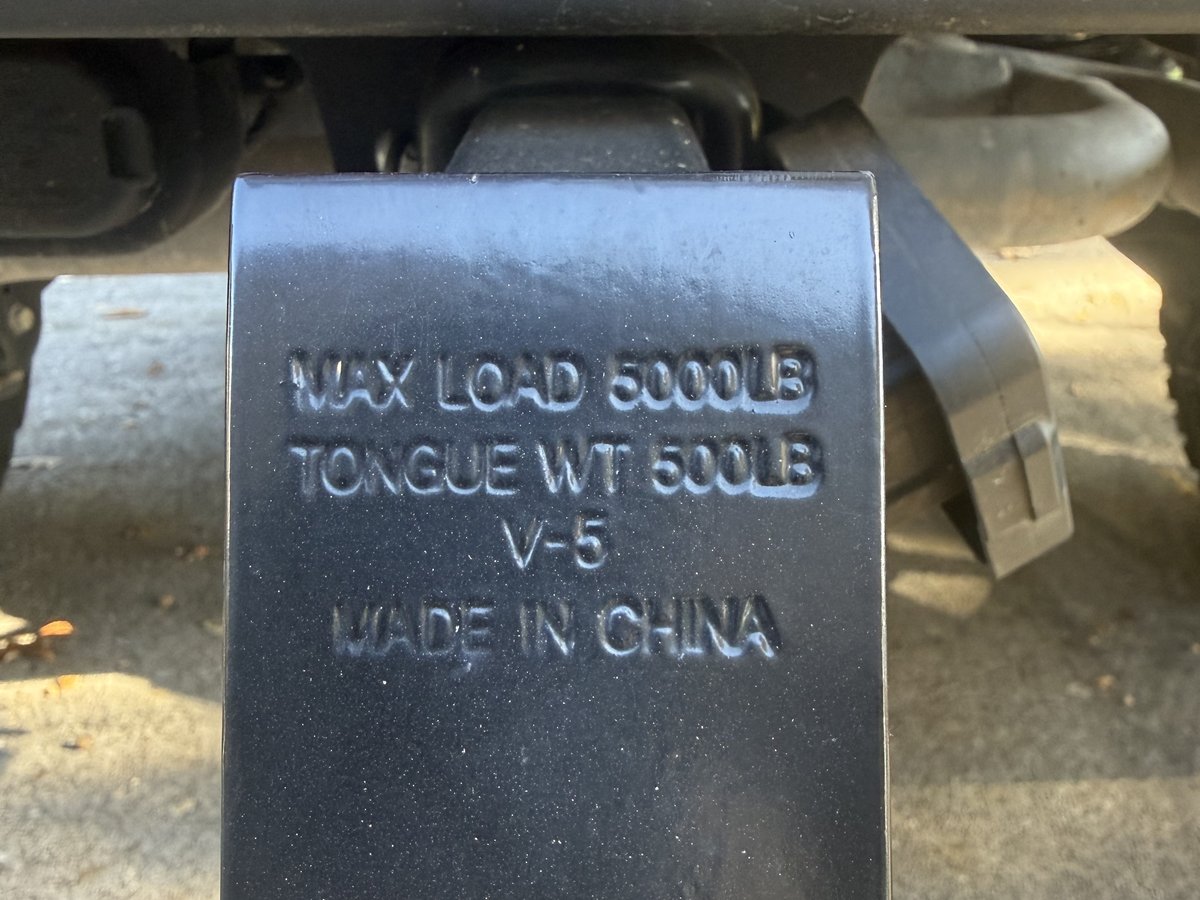
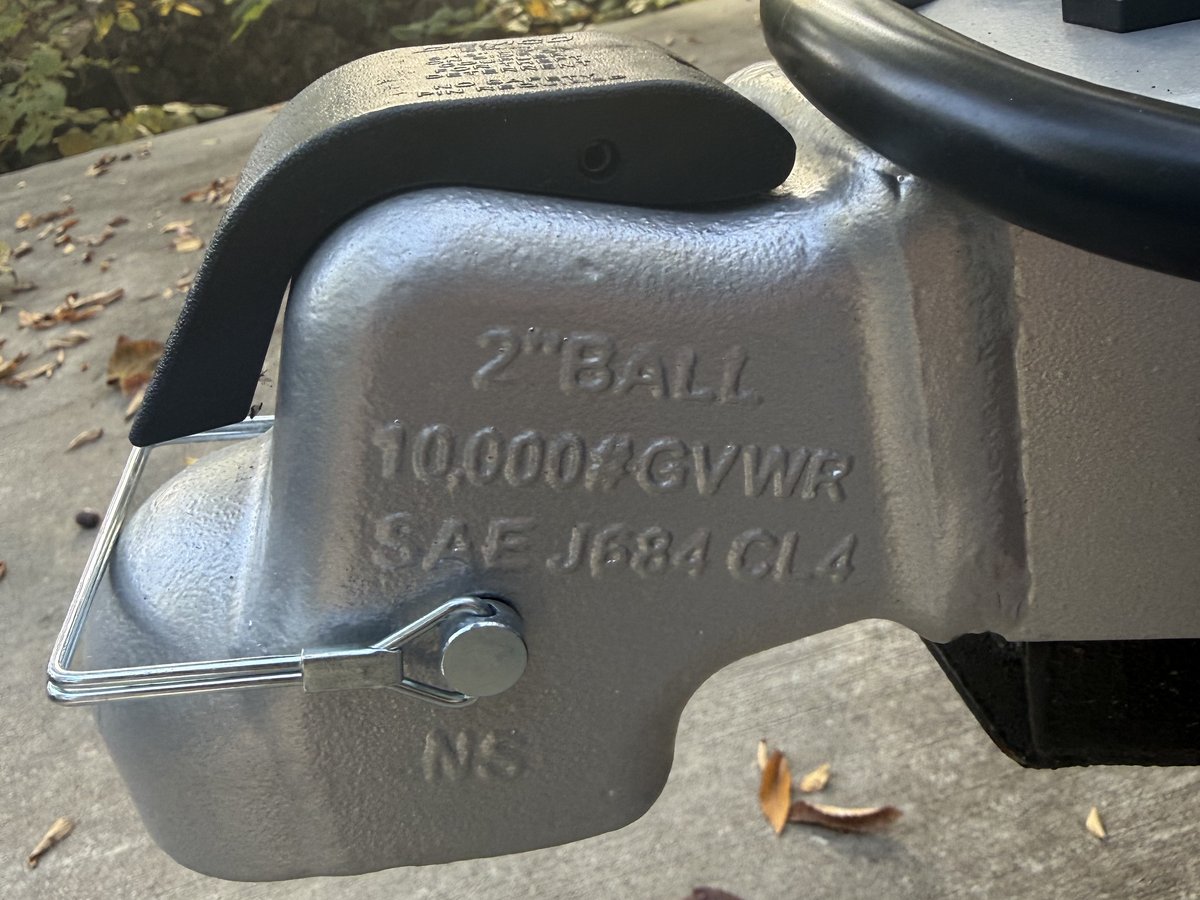
The receiver under the bumper is rated separately from the vehicle, and the rating is stamped on it. Class I is 2,000 lb trailer and 200 lb tongue, Class II is 3,500 and 350, and Class III is 5,000 and 500, and Class IV runs to 10,000. My 200 lb tongue sits right on the Class I ceiling, so I wouldn't tow a loaded teardrop like mine on a Class I hitch, because there's no margin for a heavier tongue box than you planned.
Mine is the factory Class II receiver that came with the tow package, good for 3,500 lb and 350 lb of tongue, the same as the Jeep's tow rating. The ball mount is stamped 5,000 lb and 500 lb. The coupler on the trailer is a 2 inch, 10,000 lb, Class IV. The lowest number in that chain is the one you're actually towing on, and on mine it's the receiver.
Numbers on the Jeep
Do the Math Once
If the remainder after step 4 is small, a lot of the fix is on the trailer side. Move weight behind the axle to bring the tongue down toward 10%, or move cargo out of the tow vehicle and into the galley, where it rides on the trailer's axle instead. A teardrop with good storage is handy that way.
Built to a Weight Budget.
KnoxDrops builds frames to order, and one of the first things worth talking about is what's going to tow it. A frame planned around the tow vehicle's payload, not just its tow rating, saves you from doing this math twice.
See Our BuildsShop This Post
Disclosure: KnoxDrops is a participant in the Amazon Services LLC Associates Program. As an Amazon Associate we earn from qualifying purchases — if you buy through a link on this page, it costs you nothing extra.
← Back to Blog