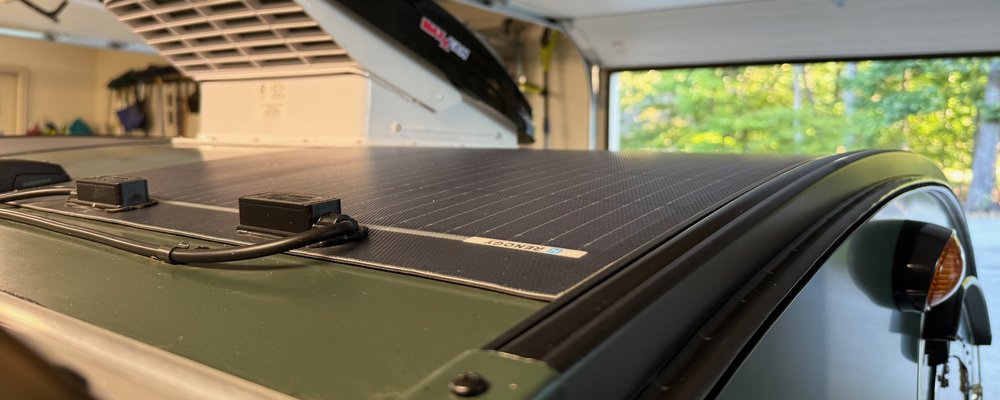
When You Do Have a Plug.
Most of the places I camp don't have a plug. Elkmont, Cades Cove, the forest roads in Pisgah — none of them have a pedestal. In the Smokies, Cades Cove, Elkmont and Smokemont only have a few 5-amp outlets set aside for medical equipment, and Look Rock is the one park campground with electric sites, ten of them. So the 120V half of my electrical system spends a lot of its life switched off. It still earns its spot in the trailer, mostly because of one appliance: the AC. Here's what the shore inlet and the inverter are for on a teardrop that usually camps without hookups, what really needs household power, and how I get by without a generator.
What Actually Needs 120V
The list is shorter than most people expect. Almost everything that matters in a teardrop runs on 12V, and the inverter is there for the handful of things that don't.
The Fridge: No
My Dometic CFX3 is a 12V compressor fridge on its own 14 AWG run and 15A fuse. Running it through an inverter would just add conversion loss to the load that runs all day.
The Furnace: No
The Propex burns propane and runs its fan on 12V. Heat is the last thing I'd want depending on the inverter being switched on.
Lights, Fan, Pump: No
All 12V, all off the fuse block. The MaxxFan, the reading lights, and the SHURflo pump never touch the inverter.
The AC: Yes
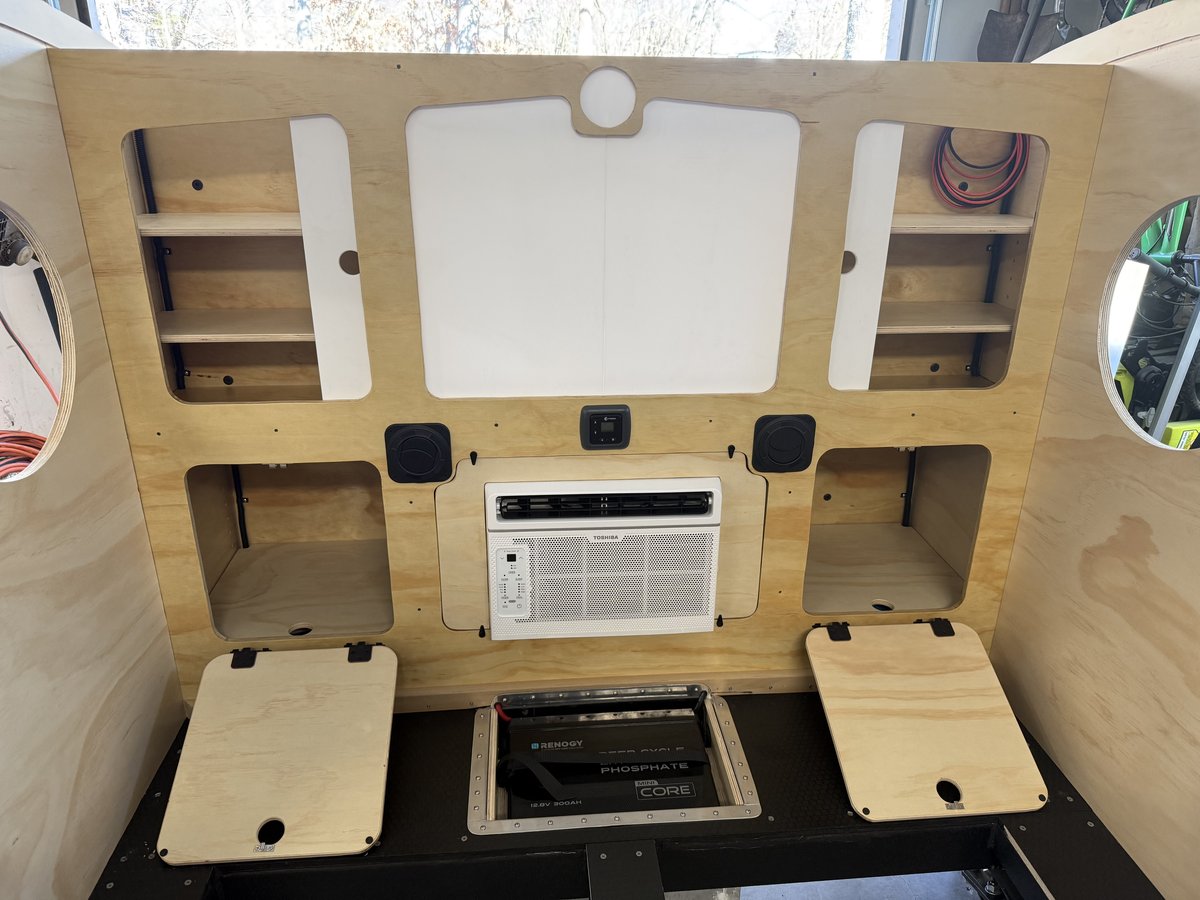
A 6k BTU Toshiba window unit on a shelf in the middle interior cabinet. It needs shore power, or the Jackery for a few hours. East Tennessee humidity in July hangs around like it owns the place, so this is the one that makes a plug worth having.
Laptops and Tool Chargers: Sometimes
Small loads for short stretches, which is what a small inverter is good at. A 12V USB-C adapter can handle a lot of laptops without the inverter at all.
A Hair Dryer: Not Really
1,500 watts is about 125 amps out of a 12V battery before inverter losses. A small inverter won't start it, and I wouldn't ask the battery to try even if it could.
Coffee is the one people push back on. An electric kettle is a 1,200 watt load with the same problem as the hair dryer, and a stovetop kettle on the two burner cooktop does the job on propane in about the same time.
One Box, Three Jobs
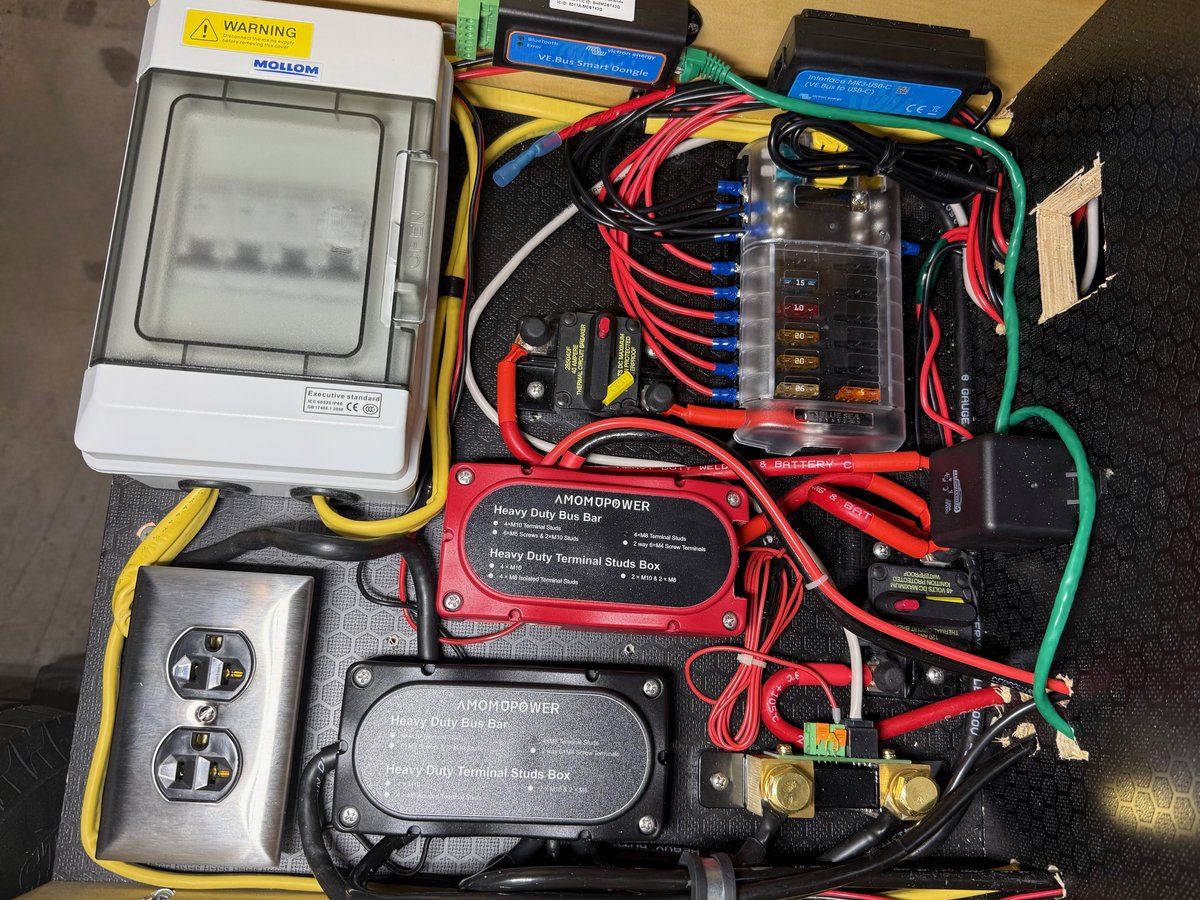
The MultiPlus is an inverter, a shore charger, and an automatic transfer switch all in one case, and that last part is what makes it worth the money over buying a separate inverter and charger. With a cord plugged in, it passes the pedestal's power straight through to the outlets and charges the battery at the same time. Pull the cord and the outlets keep working off the battery without a gap.
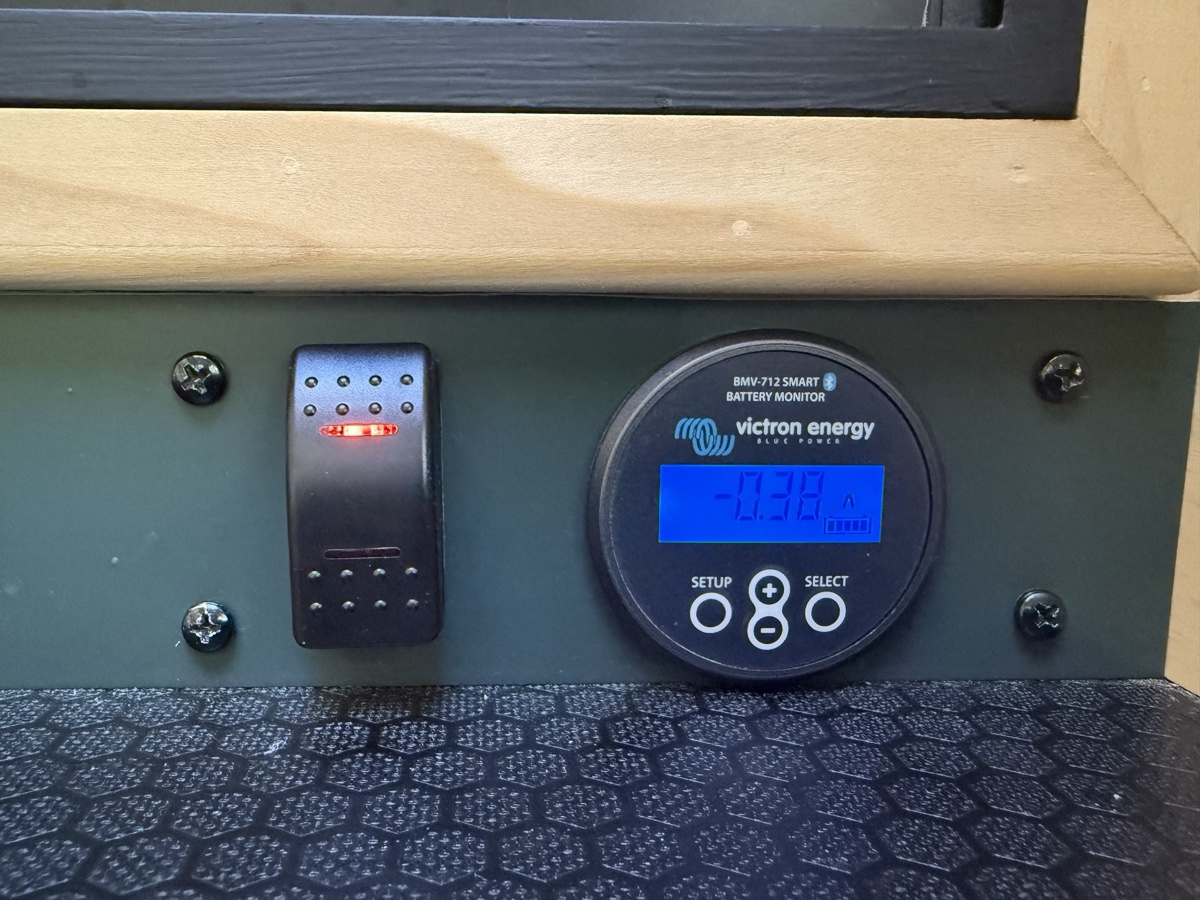
Mine is on the small end of the range, the 12V/800VA/35A model. Bigger means heavier DC cables, a bigger fuse, and more idle draw for capacity most teardrops rarely use. A three position rocker on the control panel runs it: up wakes the whole system, middle shuts the inverter off and isolates the DC side, and down puts the MultiPlus in charger only mode so shore power fills the battery while everything else stays dark. The electrical system post covers how that switch is wired.
The Inlet and the Outlets
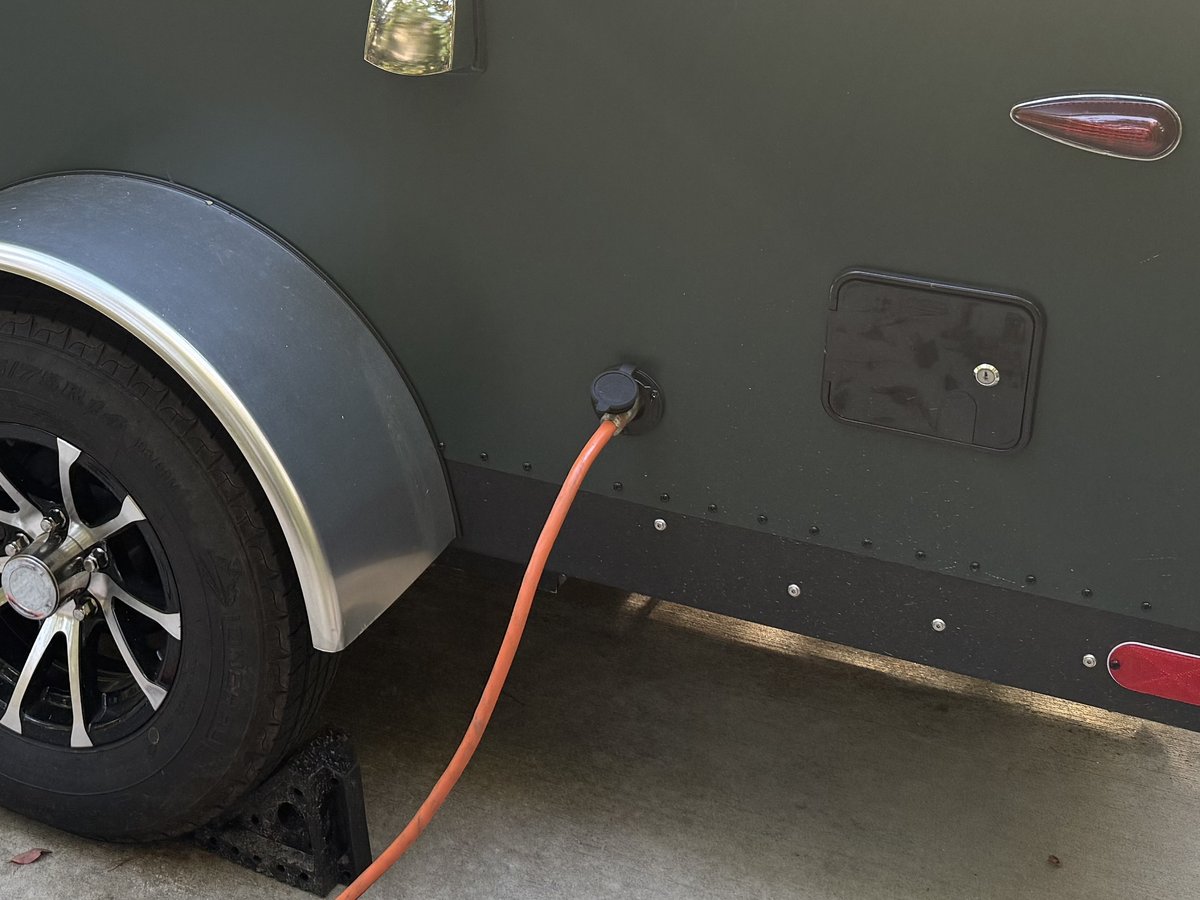
The shore inlet is on the driver's side, low on the sidewall at the back, where the electrical bays sit between the cabin and the galley. It's a 20A, 125V inlet, with the same straight parallel blades as a household extension cord, not the 30A TT-30 most RVs carry, and the rating matters a little less than you'd think because the MultiPlus has its own input current limit you set in the app. Mine is set to 16A, which is 80 percent of the 20A circuit my garage outlet is on. On an ordinary 15A circuit, drop it to 12A and you won't trip the breaker in the house. Set it too high and you'll be walking to the breaker box in the dark.
Downstream of the MultiPlus there are AC breakers, a GFCI outlet on the control panel, and a power strip in the pass-through with 4 outlets and 3 USB ports, 2 of them USB-C. I'd put a GFCI on any 120V outlet in a teardrop, since it's going to get used outdoors, near water, and with wet hands sooner or later.
Where does a plug actually show up? The driveway, a friend's garage, and the occasional state park with electric sites. Big Ridge, Norris Dam, Cove Lake and Panther Creek are all within an hour of Knoxville. Almost never a Smokies campground. The driveway matters most: before a trip the trailer sits plugged in so the battery leaves full, and the CFX3 goes on about four hours ahead. The food goes in cold, and the 35 cools down fast.
Three Ways to Charge the Battery
The sizing math for all of this lives in the amp-hours post. The short version is that 300Ah, solar, and a full charge before leaving go a long way, and shore power is the easiest way to get that full charge.
No Generator
I don't have one. A Jackery Explorer 1000 Pro rides in the Jeep, and it can run the AC for a few hours or put some charge back into the house battery through a short extension cord into the shore inlet, so it quietly covers the jobs I'd want a generator for. Plenty of people are happy with a small inverter generator, though, so here's what I'd weigh.
Weight
A small inverter generator is 40 to 50 pounds plus fuel, and it rides on the tongue or in the tow vehicle. My tongue weight is already 200 lb, and the Jeep's payload only goes so far.
Quiet Hours
In the Smokies, generators can only run from 8 a.m. to 8 p.m., and some loops ban them outright unless other loops are closed for the season. The loops where you'd want to run one are the loops where everybody would hear it.
Fuel
A gas can has to ride somewhere. On a teardrop that's usually the tongue, next to the propane tank, in the summer sun.
What It Buys
All night AC off grid, which is a real creature comfort, and a faster top-up on a cloudy week. If that's how you camp, it can be worth the weight.
The Idle Draw Is a Load
An inverter that's switched on with nothing plugged in still draws power to keep its transformer energized and its electronics waiting for a load. Call it 10 watts as a round number for an inverter this size. With the rocker up and nothing running, my BMV reads 0.38 amps, about 5 watts, and that's the whole system awake, not just the inverter.
Ten watts sounds like nothing, but over 24 hours it's 240 watt-hours, which is about 19 amp-hours out of a 12V battery every day for doing nothing. Mine works out to about 9. Ten watts is half a day of fridge, and it's the line item that surprises people in the amp-hours post. It's also why the rocker's middle position is the one to land on.
Victron has a search mode that pulses the inverter looking for a load and sleeps in between, and mine has it turned on. It cuts the idle draw but can miss a small load like a nearly charged laptop. The switch is the simpler fix, and the BMV-712 will tell you pretty quick if you forgot to flip it.
The 120V Side

If You're Planning the 120V Side
Draw It First.
The free wiring diagram builder lays out the DC side, the charge sources, and the inverter so you can see what's feeding what before you order anything.
Open the Wiring Diagram BuilderShop This Post
The 120V side of my trailer, minus the AC.
Disclosure: KnoxDrops is a participant in the Amazon Services LLC Associates Program. As an Amazon Associate we earn from qualifying purchases — if you buy through a link on this page, it costs you nothing extra.
← Back to Blog