Timbren vs Leaf Springs Behind a Teardrop.
Suspension is a decision you make once, at the frame stage, and then live with for as long as you own the trailer. On a teardrop it matters more than the weight would suggest, because a light trailer on springs that are too stiff for it bounces instead of soaking up the bumps, and everything inside takes the hit. I went with Timbren axle-less units on my build. Here's how they compare to a conventional leaf spring axle, what I changed after the trailer was finished, and why leaf springs are still a perfectly good choice for plenty of builders.
What Each One Is
Leaf springs are stacked steel strips U-bolted to a solid axle. They've been holding up trailers for about a hundred years, they're cheap, and any shop in any town can work on them. A bump under one wheel lifts that end of the axle, which tips the whole trailer, because the two sides are tied together by the axle tube.
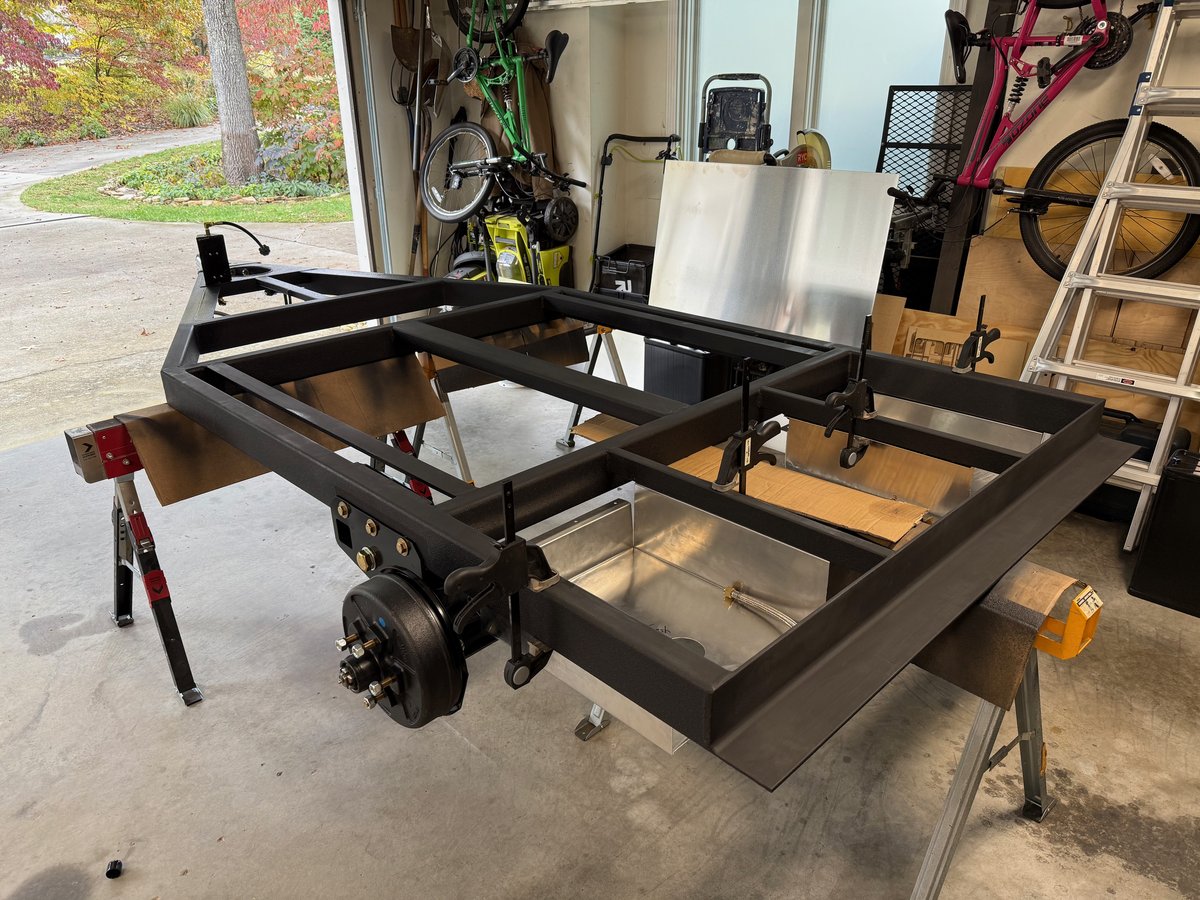
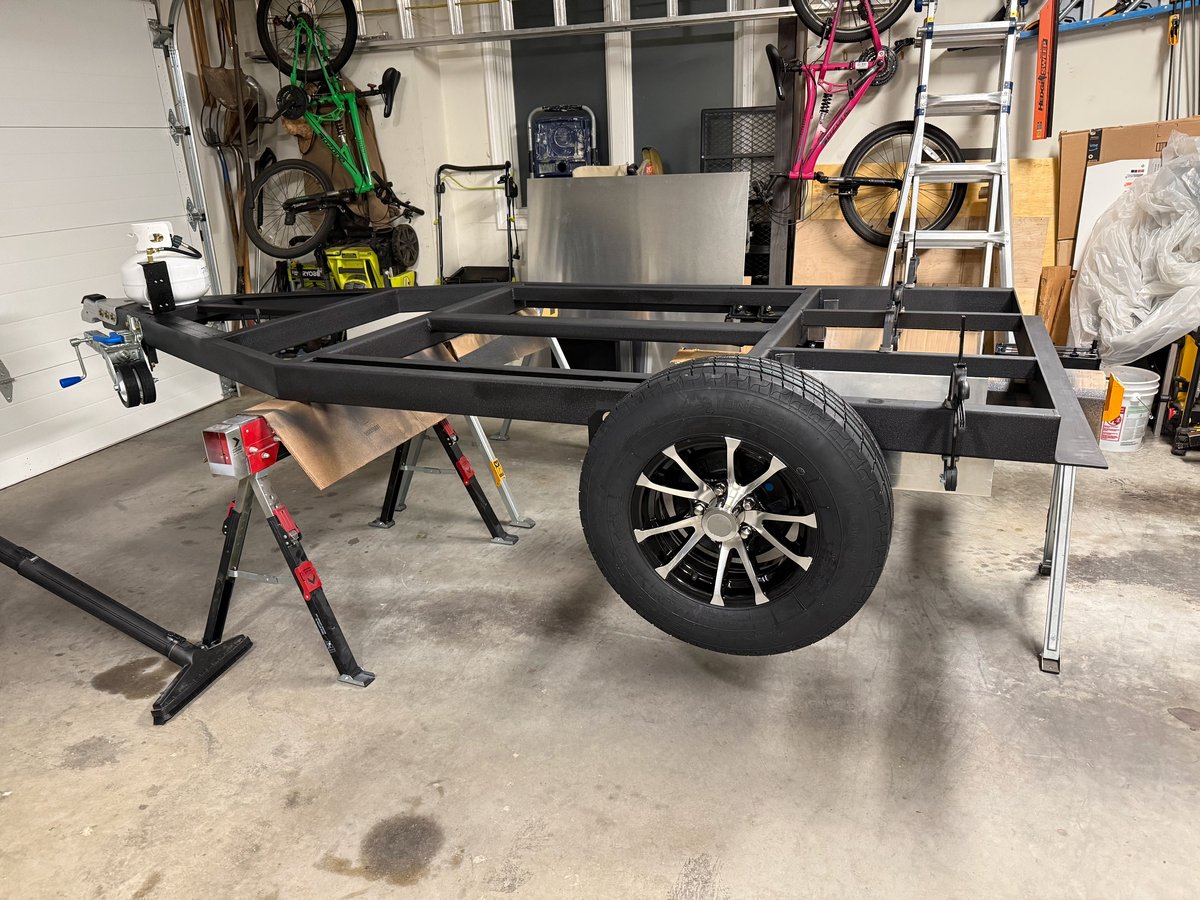
A Timbren axle-less unit bolts to the frame on its own on each side, and there's no axle tube between them. Each side has a trailing arm that pivots and squeezes a hollow rubber spring, which Timbren calls a jounce spring, so a bump under the left wheel does very little to the right one. You'll see them sold as the lighter option, but don't pick them to save weight. Timbren lists my kit at 88 lb shipped for the pair.
Mine is the heavy duty axle-less kit, part number ASR2KHDS01. Timbren rates it at 2,000 lb for the pair, and it comes on 3,500 lb spindles, the same wheel end parts as the next kit up. I swapped the jounce springs for the 3,500 lb set out of the ASR3500S05 kit. It's worth being precise about that, because these numbers get mixed up all the time. The stiffer springs change how far the arms compress under load and where the trailer sits in its travel. They don't change what Timbren publishes as the kit's rating, and I'm not claiming they do.
The practical upshot is that independent suspension keeps the trailer flatter over uneven ground, and on a forest road that's most of the time.
Where Independent Wins
Rough Roads
Potholes, ruts and rough gravel forest roads, which is a lot of what getting to a good site around here involves. The trailer stays settled instead of rocking side to side.
Ground Clearance
No axle tube hanging under the trailer means nothing low between the wheels to drag on a hump in the middle of the road.
Less to Service
No shackles, spring eyes or U-bolts to wear out or re-torque. Timbren does want the pivot bushings greased, so do those when you grease the bearings.
Easier on What's Inside
Less shock through the frame means less getting shaken loose: cabinets, screws, plumbing fittings and whatever's in the galley drawers.
One Side at a Time
Damage one side and the other one doesn't care, which isn't true of a bent axle tube.
Pick Your Ride Height
The same capacity comes in several mounting heights, so you can pick how far the spindle sits below the frame for clearance instead of adding a lift later.
What It Feels Like From the Driver's Seat
A spec sheet doesn't really show the difference, and most of what you notice comes through the tow vehicle more than anything you see in the mirror.
On pavement, honestly, not much. A well loaded teardrop on decent leaf springs tows just fine on the highway, and if someone tells you they can feel independent suspension at 65 on smooth asphalt, I think they're describing what they expected more than what they felt.
The difference shows up when the road breaks up. On rough gravel, a solid axle passes every bump across to the other side as a rocking motion that can build on itself, and the trailer starts to feel like it's arguing with the vehicle. Independent units let each wheel deal with its own problem, so the trailer mostly just follows along.
You also notice it at low speed on uneven ground, pulling into a rutted site or backing over a root with one wheel dropping into a hole. A solid axle lifts the opposite wheel and the whole trailer leans, and independent units mostly don't. Then there's what you find when you open the galley after a rough drive, which is fewer things shaken out of place.
Where Leaf Springs Still Make Sense
Rating It for the Trailer You'll Actually Have
The number that matters is the loaded weight of the finished trailer, not the bare frame, and people miss it in both directions.
Go too light and the suspension is working at its limit all the time, which wears it out and rides badly. Go way too heavy and a light teardrop never compresses the springs enough for them to do anything, so it bounces over bumps instead of absorbing them, which is harsher than a softer setup that's sized right.
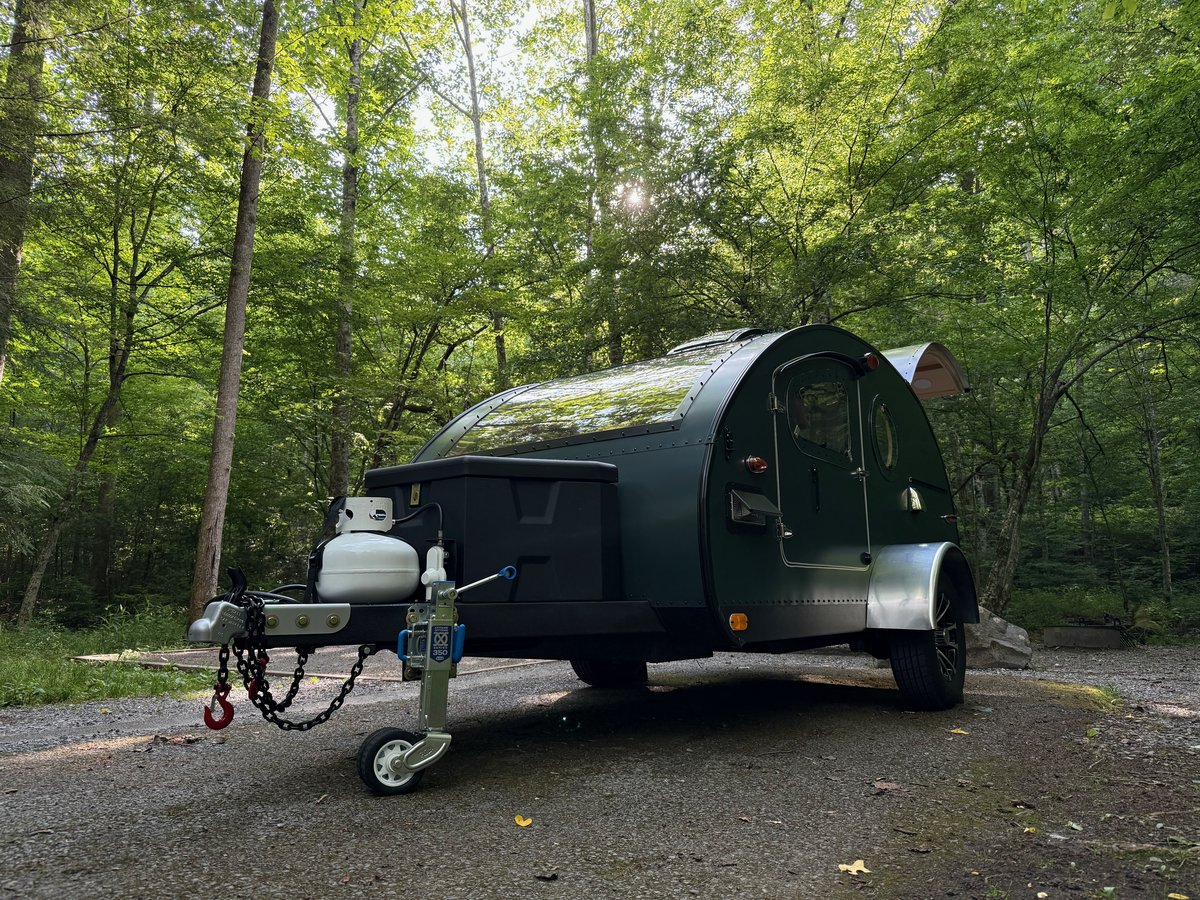
Timbren's guidance is to land your average load between 60 and 80 percent of the rated capacity, which is a lot more useful than "get the biggest one". On a 2,000 lb kit that's 1,200 to 1,600 lb. My goal when I started was to keep the trailer under 2,000 lb, but I didn't do everything I could have to keep the weight down. I went with a steel frame instead of aluminum and crammed in AC, propane heat, a sink and plumbing. It crossed a CAT scale at 1,900 lb loaded with 200 lb on the tongue, so the Timbrens are carrying about 1,700 lb. That's 85 percent of the rating, past the window, and it got there one creature comfort at a time.
On the stock springs it sat lower than I wanted, because they were carrying more than they're meant to. The 3,500 lb jounce springs were my answer to that, and the swap works because the kit's spindles were already 3,500 lb parts. The trailer gained about 3/4" of ride height afterward, which is another way of saying it had been sitting that much further down into its travel on the stock springs. If I were doing it again, I'd skip the swap and order the 3,500 lb kit outright. It's a better fit for what my trailer weighs loaded for a trip than the 2,000 lb kit ever was.
So add it up honestly before you buy: the built trailer, the battery, full water, propane and everything you carry. Spindles and hubs are a lot harder to change later than springs are.
Fitting and Living With It
Design the Frame for Them
Independent units bolt to the frame rails and need mounting points planned in. I reinforced my Timbren mounts with 1/4" 4×4 angle and gussets. Bolting them onto a frame built for a leaf spring axle is rarely simple.
Drilling the Holes
You'll drill 1/2" holes in the frame for the Timbren bolts. I gave mine a smidge of clearance since I hand drilled them, and NASA hasn't called me yet to calibrate any of their stuff by hand.
Where the Wheel Ends Up
With little or no load the pucks compress less and the wheel center sits further forward. Under load, or working against rough roads, it moves further back. All of that is measured in smidges and skoshes, but check your fender clearance with it in mind.
Torque and Re-Check
Mounting bolts get torqued to spec and re-checked after the first few hundred miles, same as anything structural. My 1.5" wheel spacers got red Loctite and 95 ft-lb.
Look at It Once a Year
There's not much to service, but grease the pivots and look over the rubber and the arms for cracks or sag when the bearings come apart. Write down the standing height when it's new so you have something to compare against later.
Brakes Are Their Own Decision
Tennessee wants brakes on one axle from 1,500 to 3,000 lb and a breakaway on any braked trailer. Mine has electric drums on the Timbren brake flange, run from a Redarc Tow-Pro Elite in the Jeep.
Underneath

Speccing a Frame?
Suspension, axle rating and ride height all get decided together, once, at the frame stage. I build frames to order, and that's the conversation worth having first.
See Our BuildsShop This Post
The Timbren kit is the one I'd buy if I were starting over. The rest is what it takes to pull a wheel and get to the bearings on a trailer like mine.
Disclosure: KnoxDrops is a participant in the Amazon Services LLC Associates Program. As an Amazon Associate we earn from qualifying purchases — if you buy through a link on this page, it costs you nothing extra.
← Back to Blog