Propex HeatSource, One Winter In.
There are two ways to heat a teardrop and only one of them lets you sleep soundly. A cheap air heater burns fuel using air from inside the cabin and vents its exhaust through a pipe you installed yourself. A room-sealed heater takes its combustion air from outside, burns it in a closed chamber, and puts the exhaust back outside — the cabin air never touches the flame. We run a Propex HeatSource for that reason, and after one winter the reasoning still holds.
Room-Sealed Is the Whole Argument
Everything else about this heater is a detail. The reason it's in the trailer is that its combustion chamber is sealed off from the space you're sleeping in. Air comes in from outside, burns, and leaves outside. Nothing about that process shares air with the cabin.
The alternative is a heater that draws cabin air to burn and relies on a single exhaust pipe and its seals to keep the products of that combustion out of the space you're breathing. When those systems work, they work. When a seal fails, or a pipe cracks, or an install was rushed, the failure mode is carbon monoxide in an enclosed box with two sleeping people in it. That's not a risk profile we were willing to design around, at any price difference.
None of which removes the need for a CO alarm. Run one regardless of what you heat with — a room-sealed heater lowers the odds, it doesn't eliminate them, and the alarm is the cheapest thing in the whole build.
What It Costs to Run
A propane furnace has two appetites. The obvious one is propane, and the less obvious one is electricity — the fan and the control board run off the 12V system whenever the heater is on, which means the heater is quietly competing with the fridge for the battery bank on exactly the nights you need both.
Propane
Cycles like any thermostat-controlled heater. A cold night takes noticeably less than people expect, because the cabin is small and reheats fast once it's insulated.
Amp-Hours
The fan is the draw, not the flame. Worth measuring on your own shunt over a cold night and adding it to the battery sizing sums — it's not nothing.
Recovery Speed
The advantage of heating a small insulated box: it comes back up to temperature in minutes, so it can run in short bursts rather than continuously.
Thermostat Behaviour
Set it lower than you'd set a house. A teardrop overshoots easily and you'll be opening a window at 2am, which wastes the propane and the amp-hours both.
Living With It
One winter of camping in the Smokies, where the valleys hold cold air and a clear night in the shoulder season will drop further than the forecast suggested. What we've found:
It Just Runs
Set the thermostat, sleep. No pre-heating ritual, no fuel priming, no waiting on a glow plug.
Quiet Enough
You hear the fan, and you hear it cycle. In a cabin this size that's unavoidable with any forced-air heater — it's a hum, not a roar.
Dry Heat
Underrated. Because combustion is sealed, it isn't dumping water vapour into the cabin the way an unvented burner would — which matters a great deal given how much moisture two sleeping people already add.
Shares the Propane
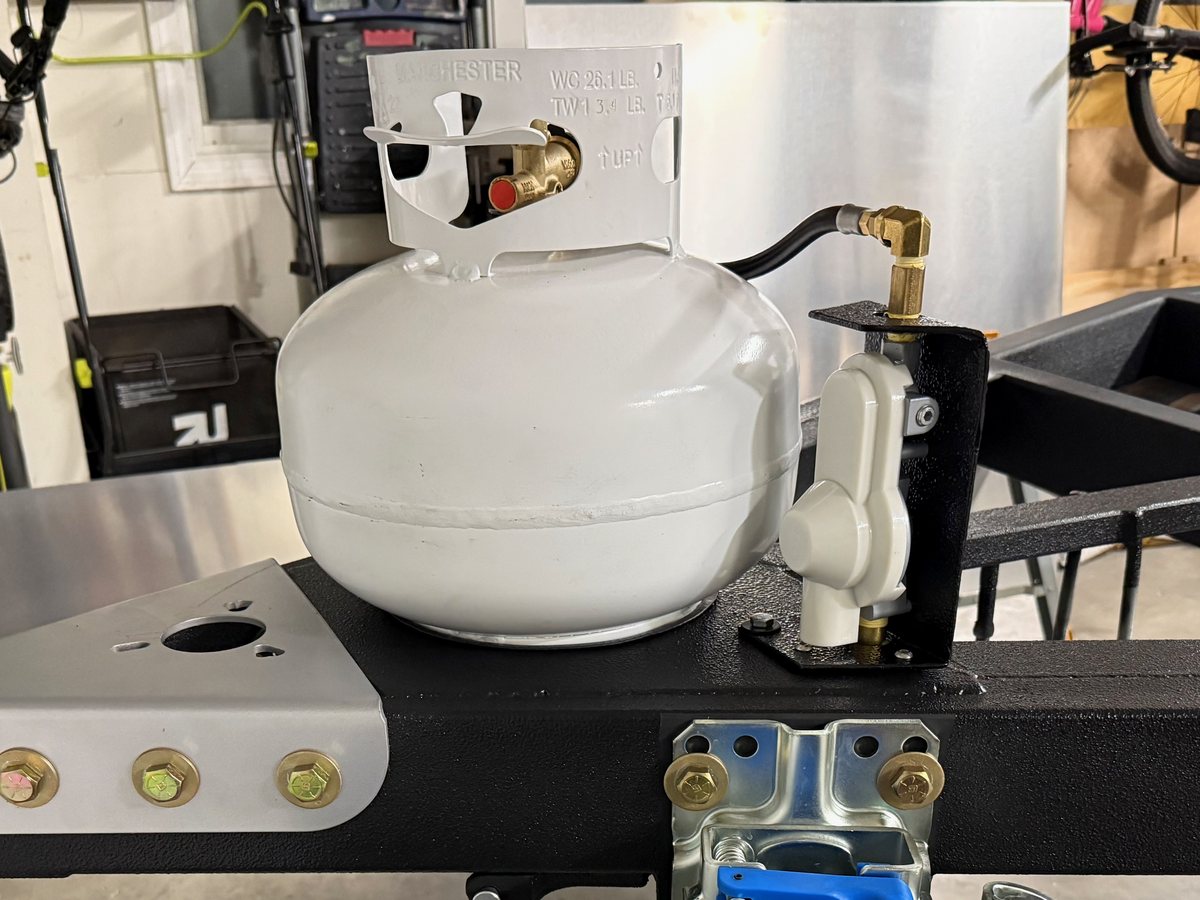
Same bottle as the cooktop. One fuel to manage rather than a separate diesel tank and its own filler.
One Outlet Isn't Enough
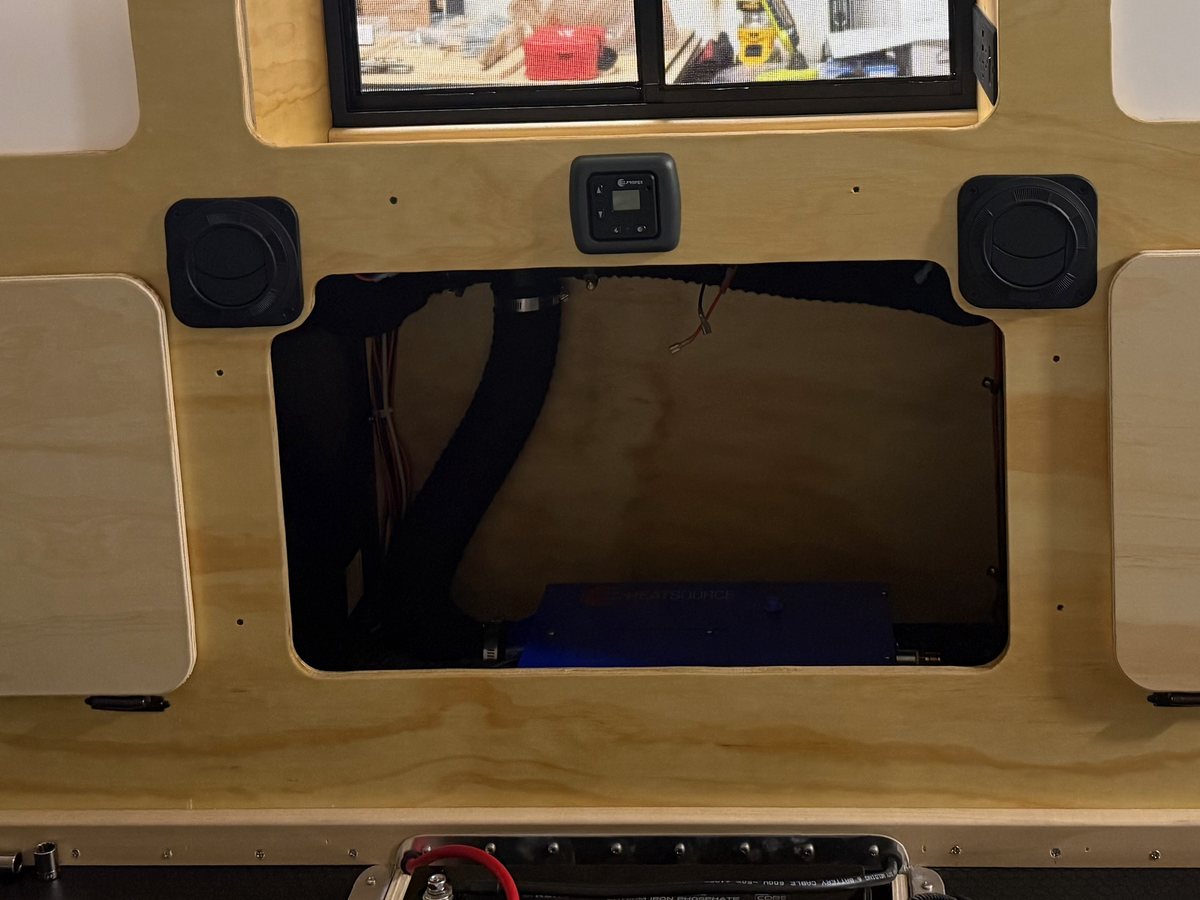
The kit ships with a single outlet and a metre of ducting. We split it with a 60mm T-piece to two outlets, one each side, so each person can adjust the warm air on their side or close their vent entirely. Plan that before the interior panels go on.
Winter Storage
Like everything propane, it wants the bottle off and the system shut down properly when the trailer sits. We'll be sharing a winterizing post soon, so check back for the details.
Against the Cheap Diesel Heaters
The comparison everyone actually wants. The inexpensive diesel air heaters sold under a dozen brand names are genuinely capable of heating a small space, they're a fraction of the price, and plenty of people run them without incident. Being fair about them matters, because the price gap is large enough to be a real decision rather than a formality.
Our position isn't that the cheap heaters are unusable. It's that a sealed combustion chamber is the one component in a camper where we'd rather not be relying on our own workmanship, and the price difference bought exactly that.
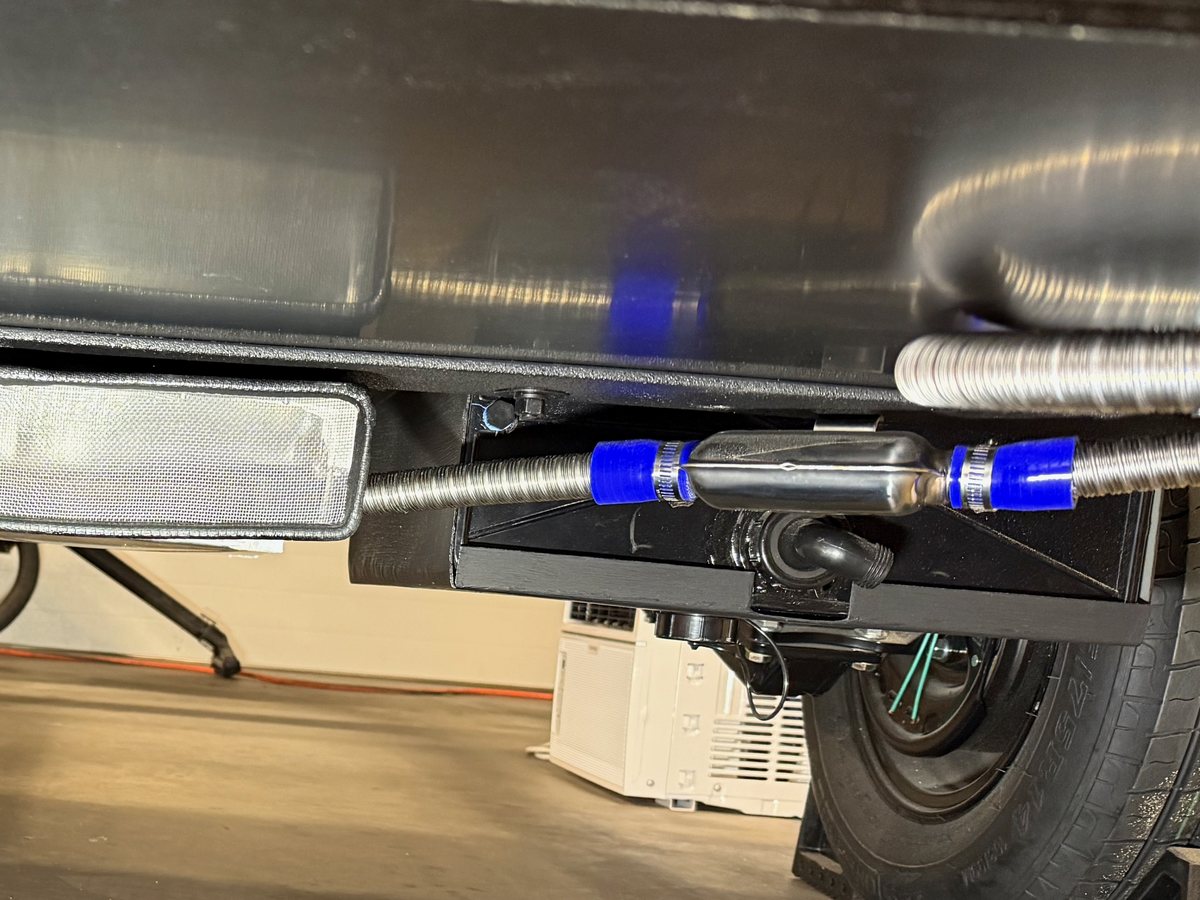
In the Bay

Where It Falls Short
Planning the Power?
The heater's fan is one more load competing for the same battery bank as the fridge. Our wiring diagram builder will size the system around both.
Open the Wiring Diagram BuilderShop This Post
The heater and its thermostat come from a Propex dealer, not Amazon. What's here is the CO alarm every camper needs, the parts to take the ducting past the single outlet the kit ships with, and a tank to run it all. The HS2000 uses 60mm ducting, so match that size on every ducting part.
Disclosure: KnoxDrops is a participant in the Amazon Services LLC Associates Program. As an Amazon Associate we earn from qualifying purchases — if you buy through a link on this page, it costs you nothing extra.
← Back to Blog