Bears, and a Galley Full of Food.
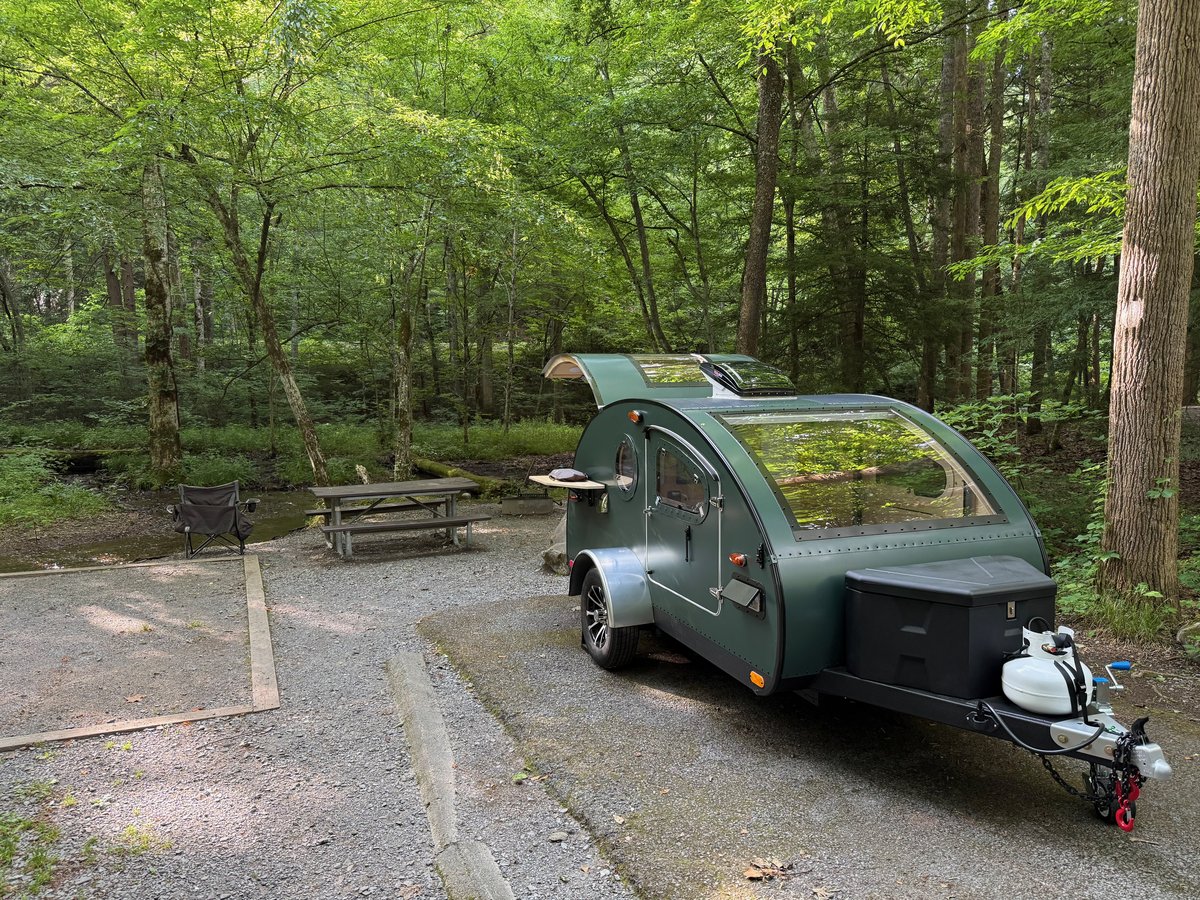
A teardrop galley is basically an outdoor kitchen with a fridge in it, and I park mine in the Great Smoky Mountains, which has one of the densest black bear populations in the East. If you're tent camping, your food problem is a cooler and a bag. Mine is a fridge on a slide, drawers full of dry goods, a gray tank that smells like last night's dishes, and a hatch that was built to keep rain out, not claws. Here's what the park requires, why a latched teardrop meets it, what I honestly don't know, and what I do after every meal.
An Outdoor Kitchen With a Fridge in It
Think about it from the bear's side for a second. Every night I cook on a two burner stove at the open end of a box full of food, then close the box up and go to sleep on the other side of a plywood wall. The galley has the fridge, the drawers, the cutting board that had chicken on it, and nine gallons of gray water that used to be dishwater.
A black bear's nose is the whole problem. A latched hatch keeps a bear from getting to the food, but it doesn't do anything about the smell that brings one over, and after you cook dinner outside there's always a smell. That's why I care as much about the wipe down as I do about the latches. A bear that gets food at a campsite once learns that campsites are where the food is, and that usually doesn't end well for the bear.
Fall is when it matters most. Bears are eating everything they can find before winter, and October also happens to be my favorite time to camp.
What the Park Requires
The Smokies enforce food storage in the campgrounds. Elkmont's rules spell it out: all food, coolers, and equipment used to prepare and store food have to be kept in a sealed vehicle or camping unit of solid, non-pliable material at all times when not in use. Scented stuff like soap and candles counts, and so do water containers. Cades Cove's rules add that it applies even when the containers are empty, and even if they're certified bear resistant.
Unattended or improperly stored food, coolers, and scented items can be impounded by campground staff, and violators get fined. Rules change, so check your campground's page before every trip instead of trusting a blog post, this one included.
The question every teardrop owner asks is whether the trailer counts. The rule says solid, non-pliable material, and a hard sided teardrop with the hatch latched is exactly that. It's a camping unit, not a tent. No ranger has ever said anything to me about mine either way. What the rule doesn't really cover is the hour after dinner, when the hatch is up and the smell is fresh, and that part's on me.
What Stays Latched, and Where
I don't move food into the Jeep at night. Everything stays in the teardrop, put away and latched, and the real work happens before the latches close.
The Fridge
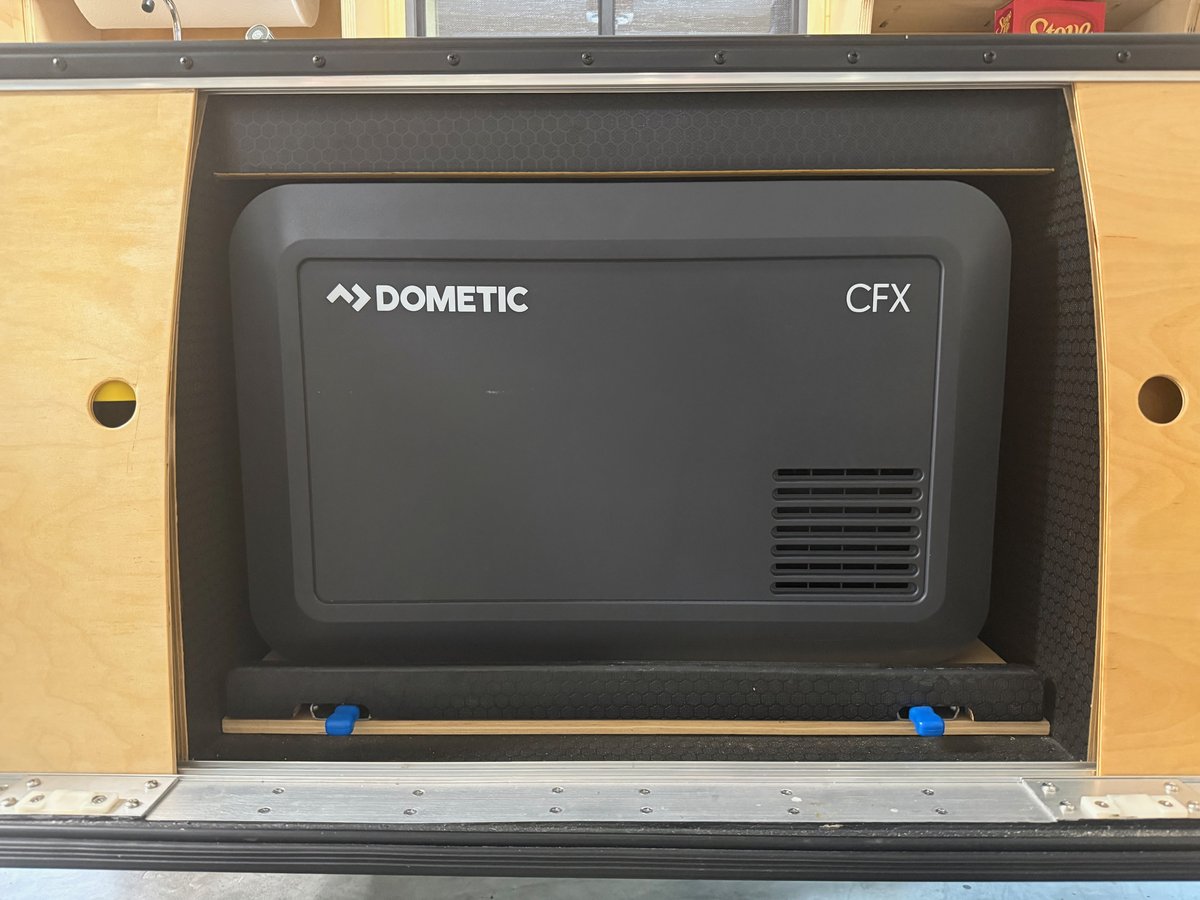
It's bolted to its slide tray in the galley. At night the lid is closed and latched, the slide is pushed home, and the galley hatch gets closed and latched over it.
Dry Goods
In the galley drawers behind the hatch. Nothing in a bag on the counter and nothing left on the picnic table.
Cookware
Washed and wiped down after every meal and put away inside. Washed isn't the same as clean to a bear's nose, so the wipe matters as much as the rinse.
Scented Stuff
Soap, toothpaste, sunscreen, and wipes all count under the rule. They go inside with the food, not in a bag hanging off a door handle.
Water Jugs
The rule calls out water containers too. A jug sitting on the table is a violation even if it's only ever had water in it.
The Trash
To the dumpster right away, not left for the morning. Cades Cove's dumpsters are bear proof and their rules say that one is strictly enforced. At a dispersed site it gets sealed up and packed out.
Why the Fridge Stays
A compressor fridge is a sealed box with a gasket on the lid, and mine is bolted to its tray on a locking slide. Latched shut inside a latched galley, that's two hard sided layers between the food and the outside, which is what the rule is asking for. Moving it every night would mean unbolting it, unplugging it, and finding 12V power somewhere else, and the rule doesn't ask me to do any of that.
The weak spot is the smell, not where it's stored. A fridge that gets opened a dozen times during dinner has food smell on the lid, the handle, and the bay around it. So after every meal I wipe down the fridge lid, the counter, the cooktop, and the cookware before anything gets latched.
Whatever your routine ends up being, do it the same way every night. Wiping things down when you remember and skipping it when you're tired is worse than any routine you stick to.
Smells You Forget About
The food is the obvious one. The rest is where a well meaning campsite goes sideways.
Dishwater and the Gray Tank
The gray tank holds everything that went down the sink, and after two nights it smells like it. Scrape plates into the trash first. Elkmont doesn't have a dump station; the closest one is across from Sugarlands Visitor Center, about six miles away. Never dump it on the ground at your site.
Cooking Clothes
Whoever cooked smells like dinner. The hoodie you fried bacon in shouldn't be your pillow. Bag it and put it away with everything else.
What a Bear Does to a Latched Hatch
I don't know. No bear has tested mine, I haven't tested it, and I'm not going to pretend a plywood hatch with a weather seal and a couple of latches is a bear resistant container. It wasn't built to be one. A black bear that decides to open a car door usually can, and a galley hatch is a whole lot lighter than a car door.
What the hatch does do is keep smell in, which is a different job than keeping a bear out. The same seal that keeps rain off the counter slows down whatever smell is inside from getting out. That's worth something, and it's why the wipe down comes first.
If you've had a bear work on a teardrop galley, I'd love to hear about it. Until then, the wipe down is my first line, the latches are my second, and nothing scented gets left out.
Campground vs Dispersed
At Elkmont or Cades Cove there's a dumpster a short walk away, neighbors whose habits affect yours, and rangers. The routine's easier because the campground does part of it for you. The risk is higher though, because a campground bear has already met a hundred campers before you.
On a forest road in Pisgah there's no dumpster and nobody watching. Trash gets sealed and packed out, and the gray tank stays full until I hit a dump station or get home. Pisgah's food storage orders that require bear canisters apply to overnight backpackers in certain areas, including Shining Rock Wilderness and the Black Balsam area. Anywhere else, call the ranger district before you go, since those orders change with bear activity.
At Camp


After Every Meal
Same routine after every meal. The time it matters is when you're tired, it's raining, and you just want to crawl into the cabin. If you have to think about the checklist, that's the night you'll skip it.
Camping the Smokies?
Elkmont is where I've done most of my camping in the park. My campground guide covers the sites, the dish sinks, and what no hookups really means inside the park.
Read the Elkmont GuideShop This Post
None of this makes a hatch bear proof. It just makes the cleanup routine easier to stick to.
Disclosure: KnoxDrops is a participant in the Amazon Services LLC Associates Program. As an Amazon Associate we earn from qualifying purchases — if you buy through a link on this page, it costs you nothing extra.
← Back to Blog