Cades Cove Campground With a Teardrop.
Cades Cove is the busiest corner of the most visited national park in the country, and the campground is the reason I put up with that. Staying in the cove puts you a short drive from the loop road gate when it opens at sunrise, and that's a completely different trip than driving in for the afternoon. I took my teardrop and the Jeep out there for two nights, November 2 to 4, 2026, so this is what the campground is like late in the year with a small trailer.
Why Stay in the Cove
The eleven mile loop road is one way, and the park says to plan two to four hours for it, most of it on a busy day sitting in line while somebody up front looks for a bear. The loop is open sunrise to sunset, and the campground sits right by the entrance, so I can be at the gate when it opens instead of fighting my way in from Townsend with everybody else.
In November that window gets short on both ends. Daylight saving time ended the day before I left, so sunrise was around 7:00 in the morning and the gate closed at sunset, around 5:40 in the evening. That's one lap first thing and maybe one in the late afternoon. Even on my first-light lap Tuesday there were people stopping in the middle of the road to jump out and look, so you drive a little slow and deal with it.
The campground itself is a pretty standard park campground, and that's fine, because you're not there for the campground. For the day by day version with Abrams Falls, the historic buildings, hikes and meals, see my Cades Cove weekend trip guide.
Cades Cove in November
The campground is open all year, but it shrinks for winter. The Recreation.gov page says Loop B and parts of Loop C run from mid-spring through November 30, and in the off-season only sites C1 to C12 and C26 to C61 stay open, by reservation only. My site, C11, is in the part of Loop C that stays open.
No Vehicle-Free Days
The loop closes to cars all day on Wednesdays, but only from May 6 to September 30 in 2026. Wednesday, November 4 was a normal car day, and in November if you bike the loop you're sharing the road.
Rich Mountain Road
The one-way gravel road out the back of the cove is open through November 9, 2026, then closes for the winter. Trailers aren't allowed on it, so it's a Jeep-only trip with the teardrop left at camp.
The Office
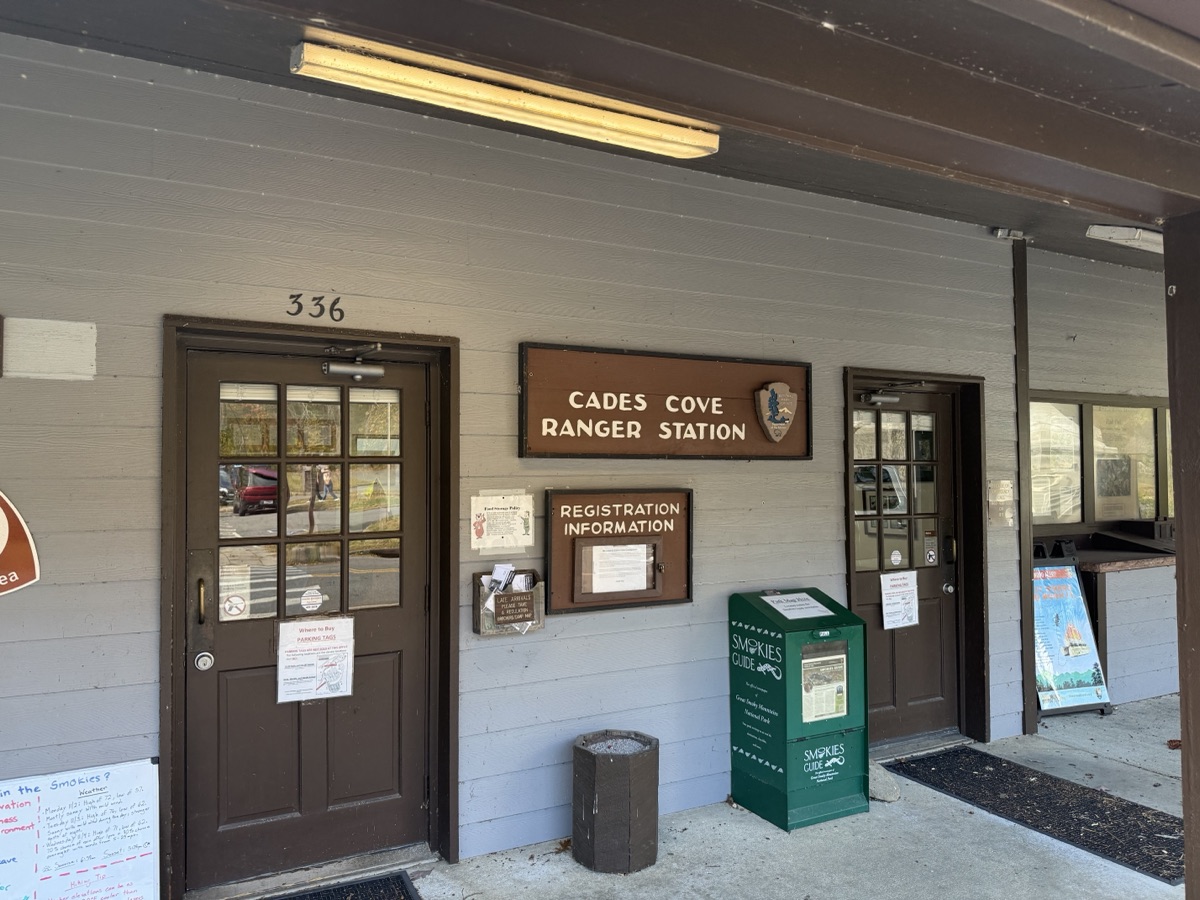
From November to April the campground office is only staffed part of the time. You still have to check in, and if nobody's there Recreation.gov says to come back the next morning between 8:30 and 9:00. When I pulled in at 1:16 on a Monday, two rangers were checking people in.
Deer in November
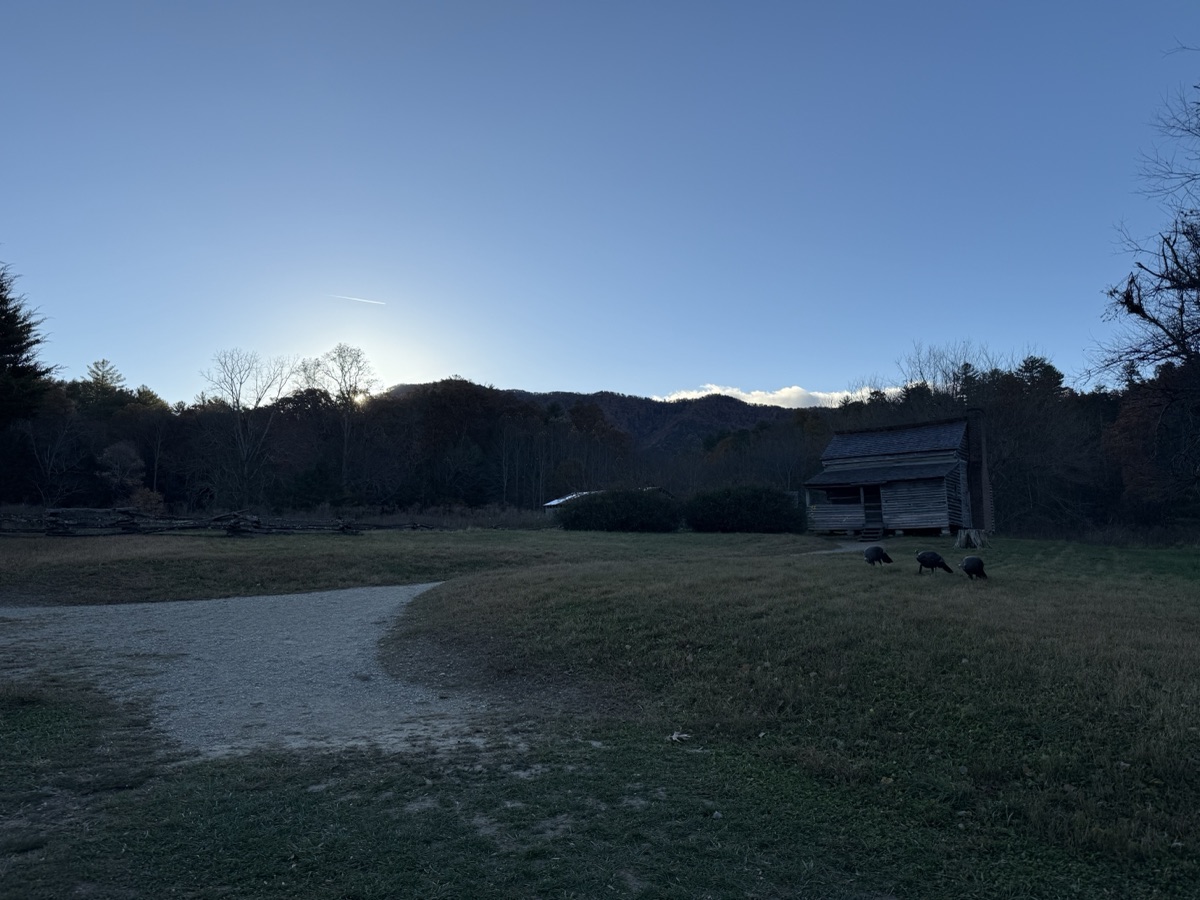
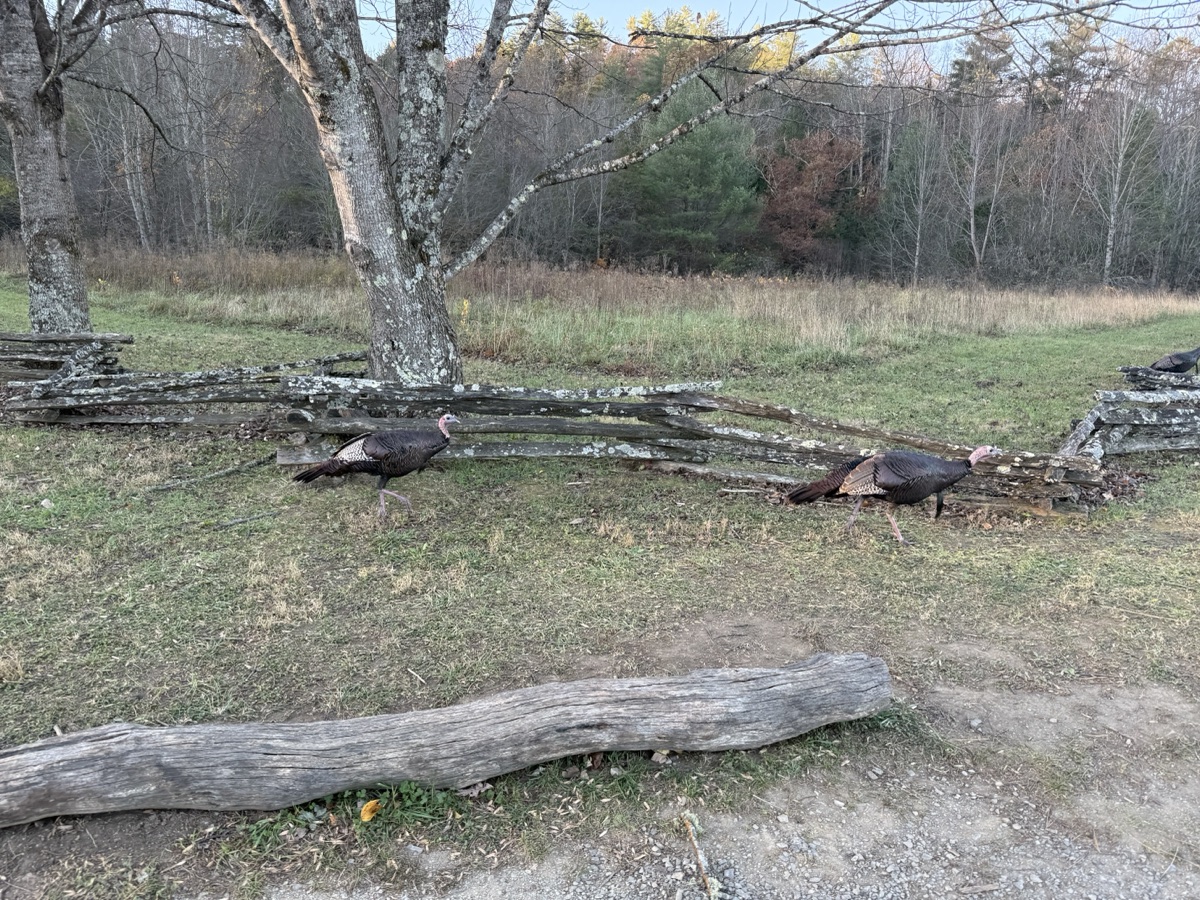
The park says white-tailed deer mate in November, and the open fields in the cove are one of the places they name for seeing them. On my morning lap I saw turkeys and a doe and her fawn along the fence lines, and a black bear way off in a thicket in a field. The campground had turkeys and squirrels.
Bears Still Eating
Bears are packing on weight before winter, so the food rules matter as much as in October.
What's Provided
No Hookups
No electric, no water at the site, and no sewer, and no campground in the park has them. A few accessible sites have a 5 amp outlet for medical equipment only. Plan to be self contained.
Water and a Dump Station
Drinking water spigots around the loops instead of at each site, and a dump station with potable water.
Restrooms
Flush toilets. No showers anywhere in the park's campgrounds.
Camp Store
The Cades Cove Trading Company store near the entrance has firewood, ice, and camping supplies, and rents bikes. Recreation.gov calls May through October peak season, and last year it stayed open into December. When I was there on November 3, the bike rental board read open 9 to 5, with the last rental at 3 p.m.
Fire Rings and Firewood
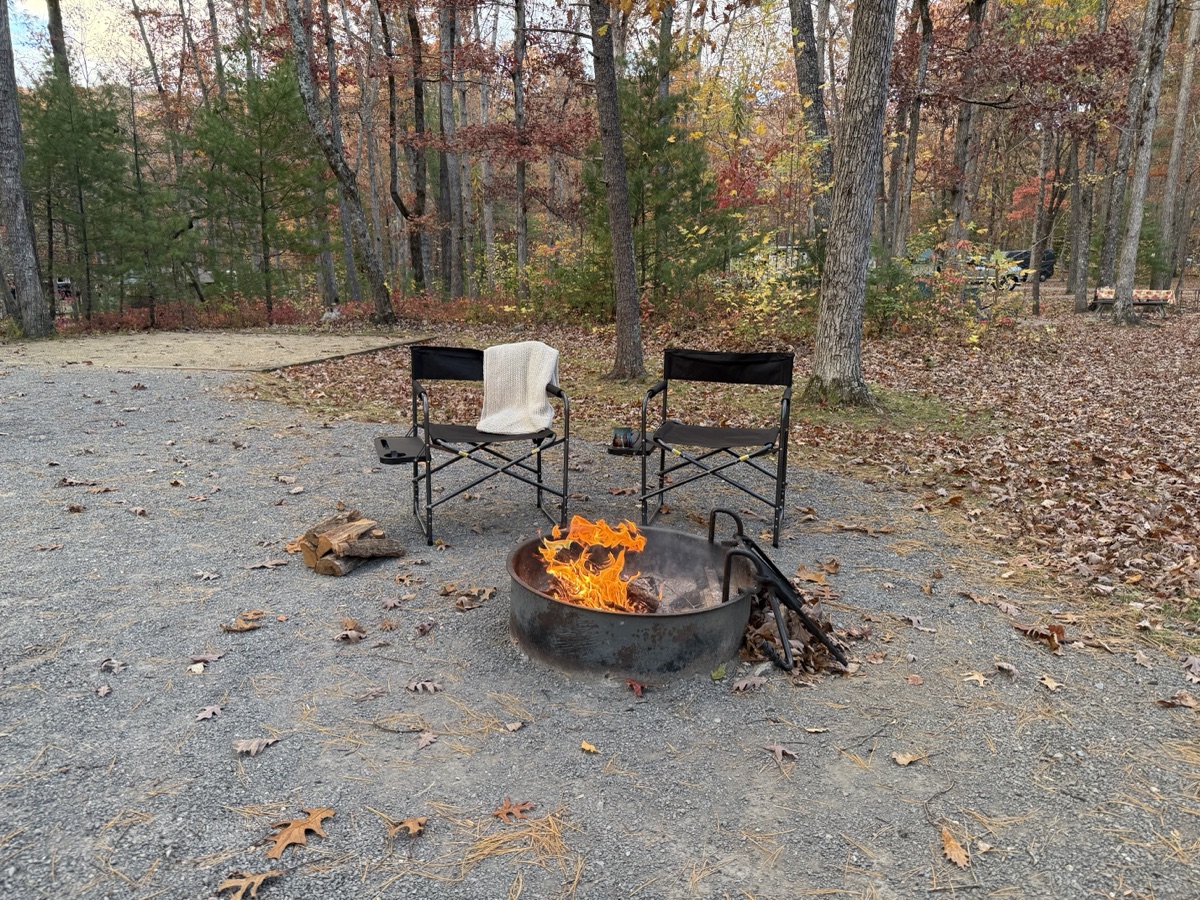
Fires in the ring only. Firewood brought in has to be heat treated, in its original bundle with a certification seal. The store sells it March to November, and dead and down wood in the park is fine to collect.
Food Storage
Bear proof dumpsters for trash.
Getting a Site
Every site is a Recreation.gov reservation ↗, and they open up to six months ahead. For the good months that means the day your window opens, so be logged in early with a couple of backup dates and sites picked out. The park lists the fee at $30 a night.
Early November still fills up. The sign said full the Monday I pulled in, I'm guessing for the leaf color. Midweek is easier than weekends any time of year.
The rules: six people and two vehicles per site, check-in at 1 p.m., check-out at noon, and a 14 night limit. Miss check-in by noon the next day and you're a no-show. Cancel the day before or the day of and you lose a $10 fee plus the first night.
A Teardrop in This Campground
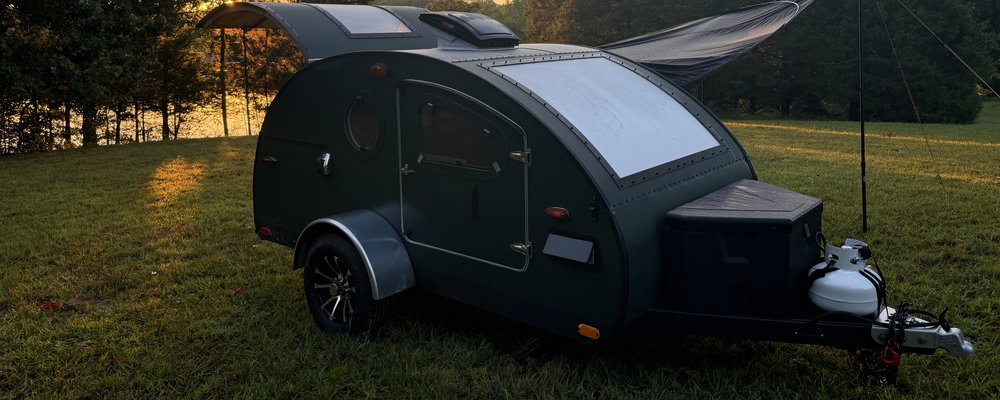
The sites I looked at on Recreation.gov are paved back-ins rated for trailers up to 35 ft, and the pads run around 40 to 48 ft long, so a teardrop and a Jeep fit with room to spare. My family used to travel four to six weeks at a time in a 42 ft diesel pusher, and national park size limits are part of why I built a teardrop. I was in C11, which is mostly level side to side, slopes a little toward the road, and is only long enough for the teardrop and the Jeep. It's very shaded, so not the best for solar, and the loop road had plenty of room to line up the back-in. Every RV site here is a back-in, and setting up takes me about 11 minutes by myself.
C11 is also close to the dump station, which stays busy with people emptying their RVs and campers and filling up with fresh water. I wouldn't pick a site that close to it again.
Loop B allows generators and Loop C doesn't while B is open, so if you're on a battery like me, C is the quieter pick. I don't run a generator. The house battery is a Renogy 300Ah, and owner reports put my Dometic CFX3 35 at about 38 to 43 Ah a day, so two nights is well inside what it holds (the math is in my battery sizing post). The trees are great for shade and lousy for solar, so the battery leaves home full. The first night it went from 13.45 V at bedtime to 13.23 V in the morning, with the cooler running, my phone, watch and iPad charging, and an hour of reading lights.
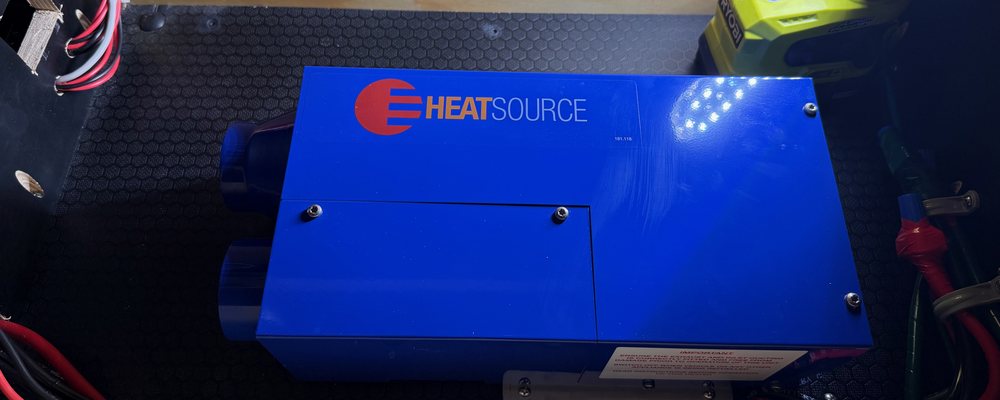
The AC is just extra weight here, since it needs shore power or a few hours off the Jackery. The Propex HeatSource runs on propane from the 11 lb tank on the tongue, but Monday night only got down to 50 and Tuesday night to 57, so I never turned the propane on and blankets were enough. Cabin heat keeps my plumbing from freezing on most trips, and when the forecast is extreme we use water bags instead of the plumbing.
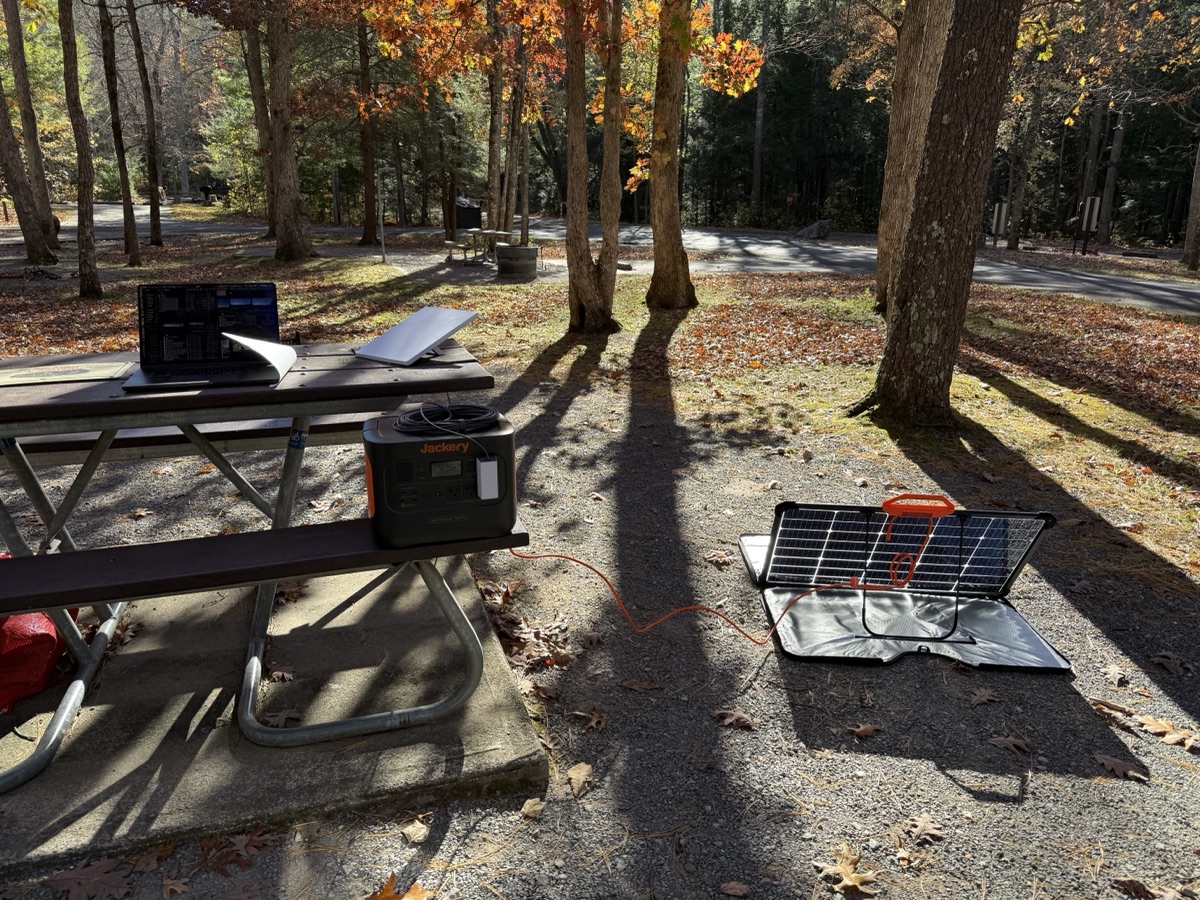
Tuesday morning I had the Jackery on the folding solar panel by the picnic table. It read 94 percent, with 27 W coming in and 20 W going out.
The Parking Tag
There's no entrance fee in the Smokies, but any vehicle parked anywhere in the park for more than 15 minutes needs a parking tag. It's $5 a day, $15 a week, or $40 a year, with your plate number on it, and it has to be the physical tag on the dash or windshield. A screenshot doesn't count, and neither does an America the Beautiful pass. A vehicle parked at your own campsite doesn't need one, but the Jeep parked at Cable Mill or the Abrams Falls trailhead does.
Daily and weekly tags print from Recreation.gov or the card-only machines at the Townsend Wye and the loop entrance, and the annual one comes from a visitor center. I fish the Smokies a lot, so I get the $40 annual decal, and I picked mine up at the welcome center on the way in.
Cooking at Camp
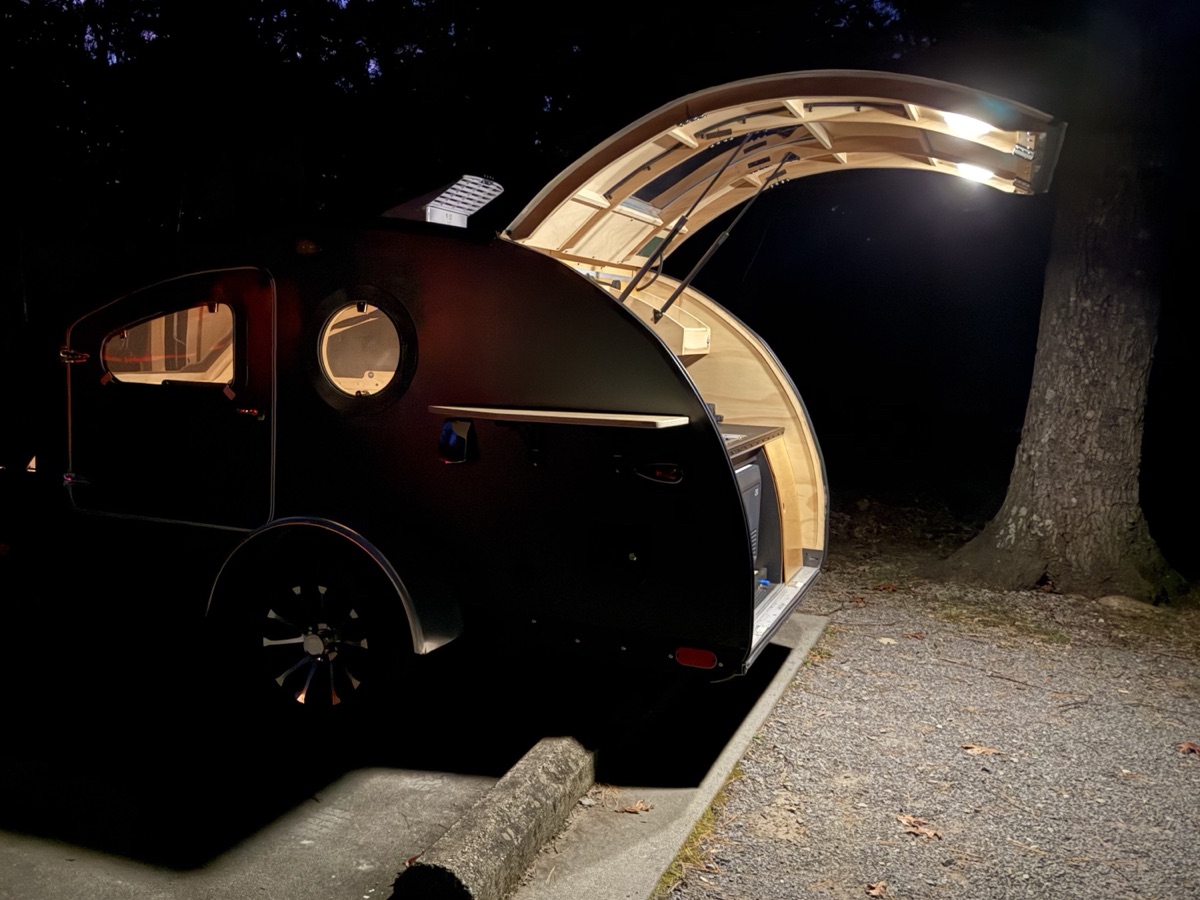
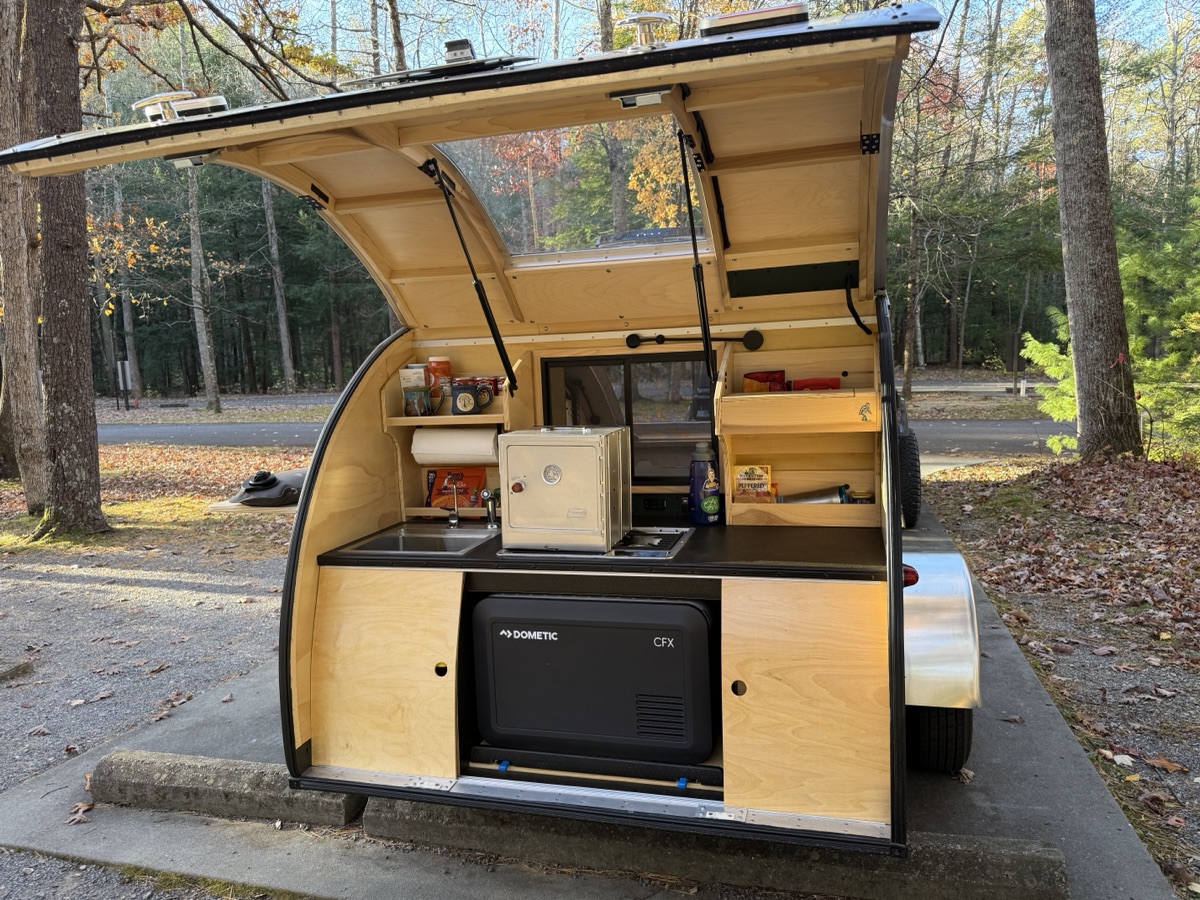
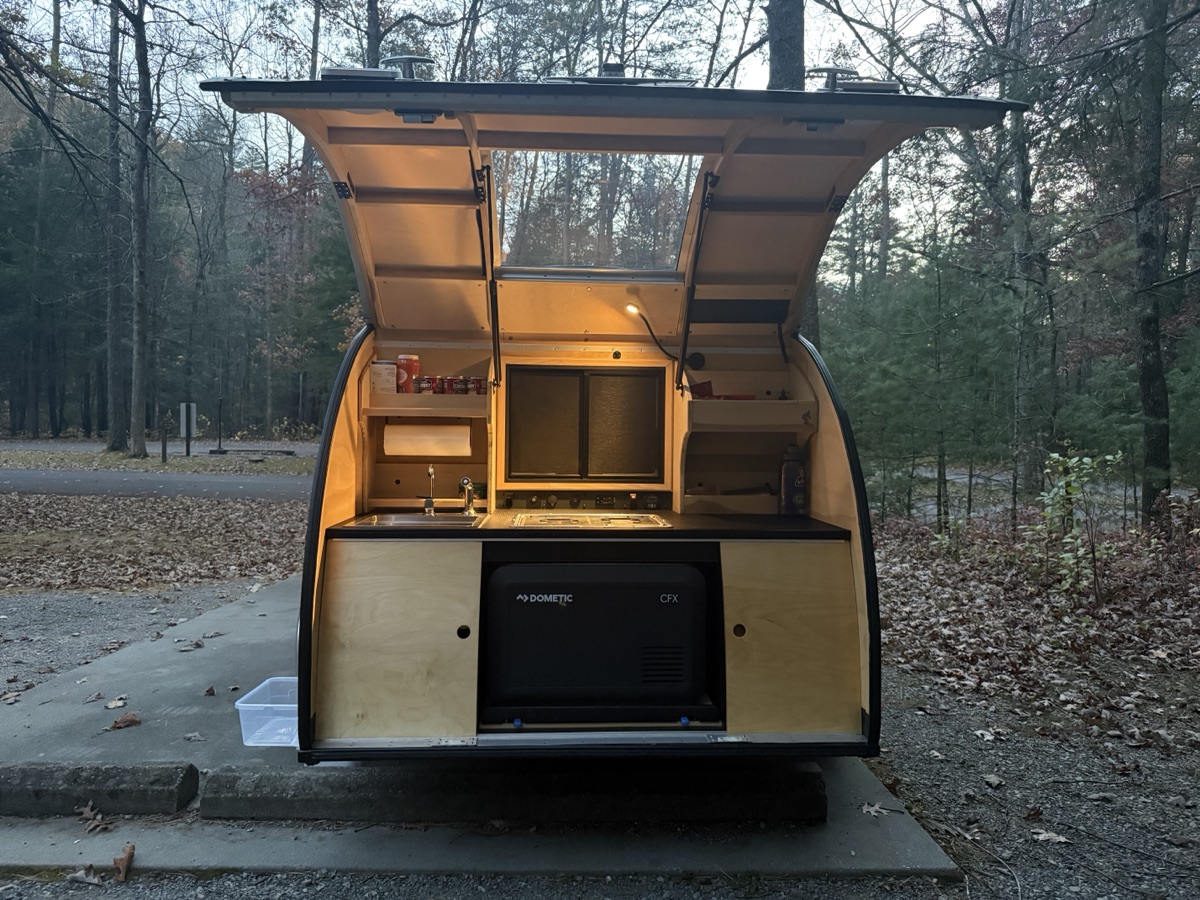
Everything got cooked at the galley. Monday night was chicken Alfredo: a Knorr chicken fettuccine side on the two-burner stove with canned chicken stirred in. Tuesday morning was canned biscuits baked in a Coleman camp oven on the stove, with peppered gravy over them. Tuesday night was kielbasa with red bell pepper, onion and Spanish rice.
Cleanup is the part that matters in bear country. Scraps and leftover gravy go into a trash bag that goes to the bear-proof dumpster, not down the sink. Leftovers get packed away before the dishes start, and the catch basket in the galley sink keeps food particles out of the gray tank. Then I wipe out the sink, the counter and the cooktop, because food particles are what the bears smell, and the mini bears too: squirrels, chipmunks and raccoons.
Things Worth Knowing First
Bears Are Real Here
Food, coolers, cooking gear, scented stuff and water jugs go in a hard sided vehicle or camping unit whenever they aren't in use. Everything of mine stays in the teardrop, put away and latched, and nothing goes in the Jeep overnight. More on that in bears and the galley.
Keep Your Distance
The park says 50 yards from bears and 25 yards from elk, and breaking that can mean a fine or arrest. Pull fully off the road to watch, and use a long lens instead of walking out into the field.
Quiet Hours and Pets
Quiet hours are 10 p.m. to 6 a.m., and generators are off 8 p.m. to 8 a.m. Pets are fine in the campground on a six foot leash, never left alone, and not on the trails.
Cell Signal
The park says it's unlikely on the loop. Download maps before you leave Townsend. I had no cell service at the campground on Verizon, so I use a Starlink Mini when there's no signal.
The Drive In
Laurel Creek Road from the Townsend Wye is winding and shared with everybody headed to the cove. Give it more time than the mileage says when you're towing. It took me an hour and 15 minutes towing from my house.
Would I Come Back?
The campground sign said it was full the day I pulled in. There were a few empty spots, which is normal anywhere: people reserve a site and then something happens and they don't show. I only had one empty site next to me, and everything else I could see was full. It was still pretty quiet.
It's convenient. You're right there for the loop, Abrams Falls and the other trails that come off it, and Townsend is maybe 20 minutes out. They call it the quieter side of the Smokies, and it has restaurants, grocery stores and gas if you forget something on the way in. The campground also has four group sites, but those are big tent sites and you can't take a teardrop there.
I usually camp at Elkmont, because I fly fish for trout a lot up here, but I wanted to give Cades Cove a try. I'd come back in November, a little sooner if I wanted peak leaf color, just not to a site that close to the dump station. Lots of trees, lots of shade, and quiet. I highly recommend it.
The Video
I filmed the whole trip: arriving and setting up, both dinners and the biscuits, the sunrise loop, the bear-country cleanup, the campfire, and packing up the last morning.
At Camp
Cades Cove Campground FAQ
Is Cades Cove Campground open in winter?
Yes. Cades Cove Campground is open year-round. In the off-season only sites C1 to C12 and C26 to C61 are open, by reservation only. Recreation.gov shows Loop B and the rest of Loop C open from mid-spring through November 30.
Does Cades Cove Campground have hookups or showers?
No. There are no electric, water or sewer hookups and no showers. A few accessible sites have a 5-amp outlet for medical equipment only. There are flush toilets, drinking water spigots and a dump station.
How long a trailer fits at Cades Cove Campground?
The park lists a maximum RV length of 35 to 40 feet, and the standard sites on Recreation.gov list trailers up to 35 feet. Check each site's listed length before you book.
How far ahead can you reserve Cades Cove Campground?
Up to six months ahead on Recreation.gov. Every site is reserved in advance, including in winter.
Do you need a parking tag to camp at Cades Cove?
Not for a vehicle parked at your own campsite. Any vehicle parked anywhere else in the park for more than 15 minutes needs a physical parking tag: $5 a day, $15 a week or $40 a year.
When are the Cades Cove vehicle-free days?
In 2026 the Cades Cove Loop Road is closed to motor vehicles all day on Wednesdays from May 6 to September 30, for walkers and cyclists. The rest of the year the loop is open to cars from sunrise to sunset.
Planning the Trip?
The Cades Cove trip guide lays out a full three day base camp weekend built around this campground, with hikes, meals, and what to do each day.
See the Trip Guide