Carrying Water When There's No Spigot.
Every campground in the Great Smokies is dry camping. No electric, no sewer, and no water at your site, so whatever you're going to drink, cook with and wash in for the weekend has to come in with you. Water is heavy, it takes up more room than you'd think, and running out of it ends a trip quicker than a dead battery does. Here's how much I think you really need, the ways to carry it, where the weight should ride, and how to keep it drinkable.
How Much You Actually Need
The number you'll see everywhere is a gallon per person per day, and that's about right if all you're doing is drinking and cooking. That dries up as soon as you add dishes, washing hands, brushing teeth and scrubbing the pan that had bacon in it. Two to three gallons per person per day is a lot closer to what a comfortable trip goes through. The easiest place to stretch it is the sink. I put the stopper in and wash dishes in a basin of water instead of under a running faucet, and the tank goes a lot further for it.
So two people for three days at the comfortable end is somewhere around fifteen gallons, and that's about 125 pounds of water. For comparison, my battery is 55 lb and my packed fridge runs 55 to 70 lb, so the water for a long weekend weighs about as much as both of them put together.
That's why for a lot of teardrop trips the better answer is to carry less and top up. Elkmont has shared spigots along each loop for filling jugs and tanks, they're just not ran to the sites, and a five gallon jug filled on the way in changes the math a bunch. A full jug or water bag/cube is about 41 pounds, so the walk back to the site counts as your workout for the day. Eat your Wheaties. Check what your campground has before you go, and don't count on a spigot that's been shut off for the season.
Jugs, Tank, or Bladder
Rigid Jugs
Cheap, easy to replace, and you can carry one to the spigot and back. They're easy to clean and sanitize, and if one splits you've lost five gallons instead of all of it.
Plumbed Tank
Neater, feeds a real faucet, and holds more without cluttering up the galley. It costs you some plumbing, a pump, and a winterizing job every fall.
Bladders
They pack flat when they're empty, which is really handy in a small trailer. They're harder to get completely clean and easier to puncture than the other two.
The Hybrid
A modest plumbed tank for the faucet plus a jug or two as a reserve. You get the convenience without sizing the tank for the longest trip you'll ever take.
Bottled, Separately
Whatever your main supply is, a few sealed bottles stashed somewhere means a bad tank is an annoyance instead of the end of the trip.
One Giant Tank
It works, but it's the heaviest way to do it, the hardest to fill without a hose, and if something goes wrong with it you've got no backup.
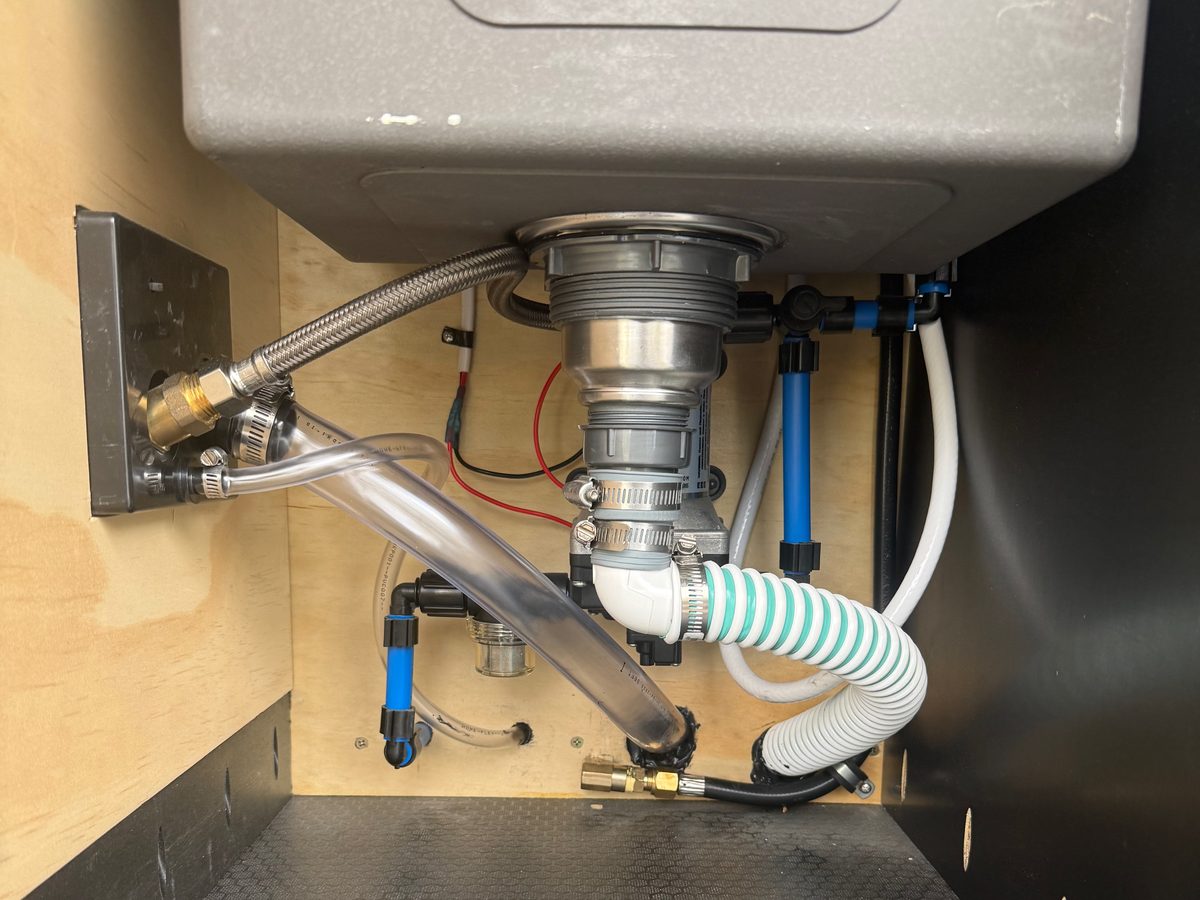
I went with two 9 gallon Valterra tanks, one fresh and one gray, sitting in aluminum pans under the galley end of the frame, with a 12V SHURflo pump feeding the sink. Full, the fresh tank is about 75 pounds, which is already more than my battery, and a tank twice that size would outweigh the battery and a packed fridge together. Having the two tanks the same size also means everything that comes out of the faucet has somewhere to go, so the gray side can't run out of room before the fresh side runs dry.
Where It Rides
A hundred and twenty-five pounds is enough to change how a teardrop tows, and unlike the battery it comes and goes. A tank that's full on the way out and empty on the way home gives you a trailer with two different tongue weights, and the gray tank fills up as the fresh one empties, so the weight moves around during the trip too.
If your layout lets you, put the water low and close to the axle, and ahead of it rather than behind. Water behind the axle takes weight off the tongue, and that's one of the easier ways to take a trailer that towed fine last season out of range this season. My tanks break that rule, a little. They sit just behind the axle, under the galley end of the frame, because that's where the sink is. Just behind is a long way from hanging off the back bumper, though. That close to the axle the water doesn't have much leverage over the tongue, so it moves the number some but not a lot.
When I ran the trailer across the CAT scale on August 27 the fresh tank was full, and it came in at 1,900 lb with 200 lb on the tongue, about 10.5%. That's on the low end of where you want to be, but it's in range with the water in. Drain the fresh tank and the tongue gains a little weight instead of losing it, which is the direction you want it to go. The tongue weight post has the rest of the scale ticket and the math.
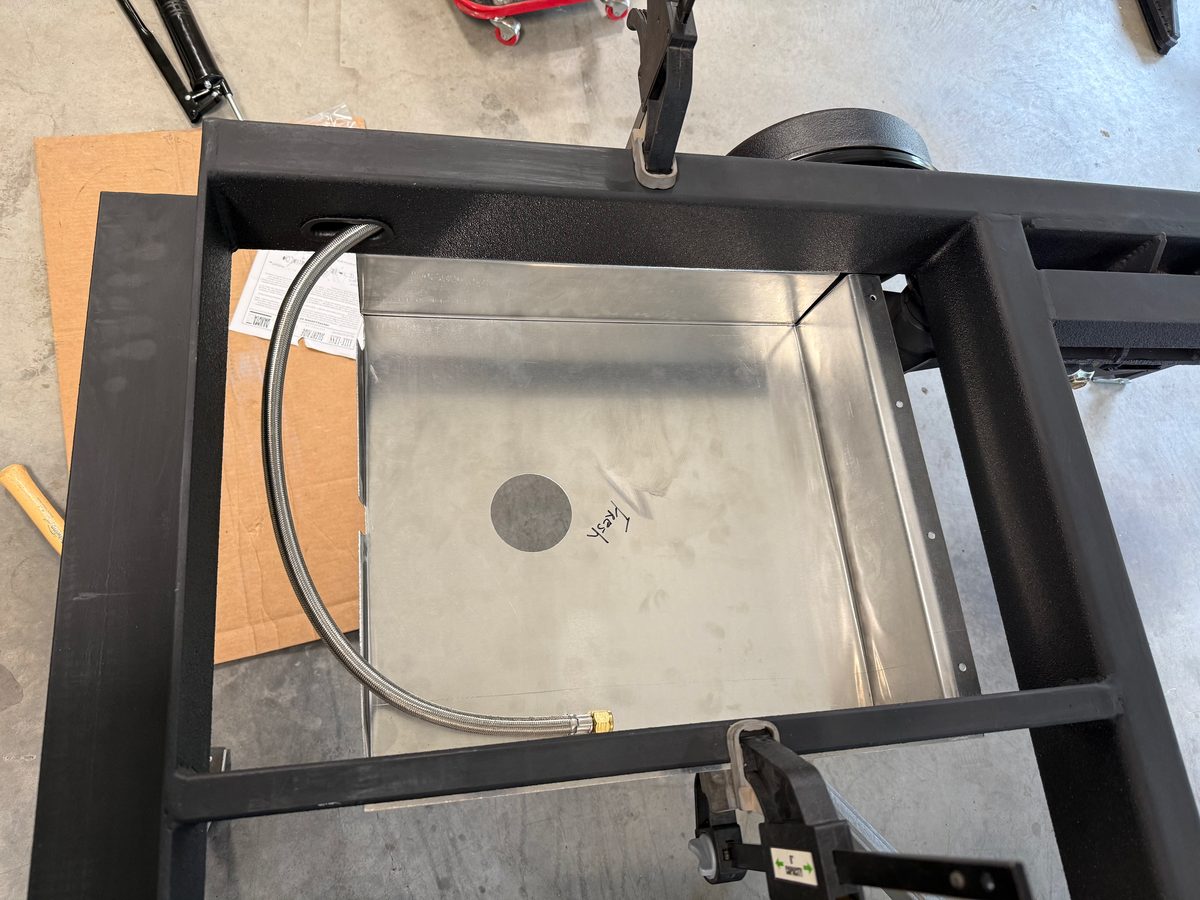
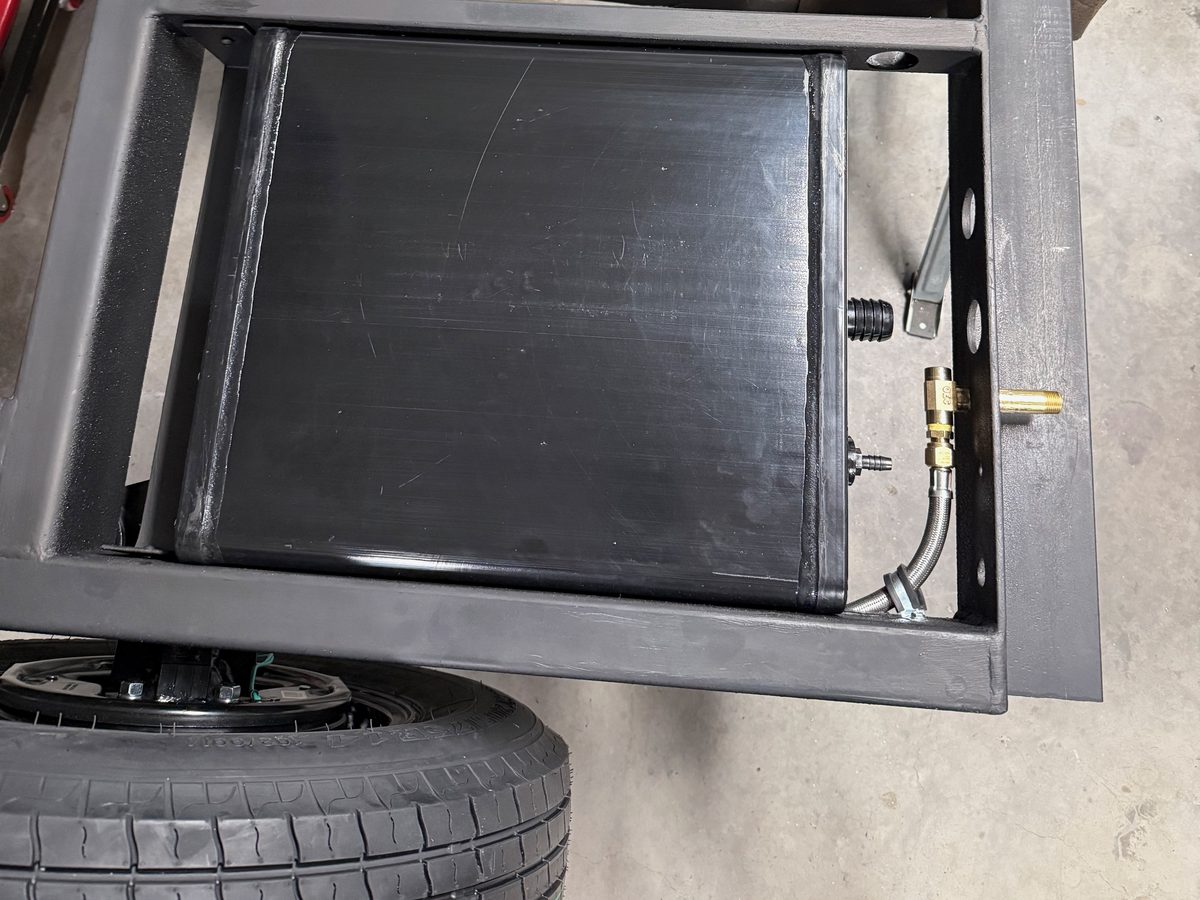
Jugs make this a lot easier, since they can live wherever the weight works best. Moving two jugs from the galley up to the tongue box is a real change in how the trailer behaves, and it doesn't cost a dime.
Keeping It Drinkable
Water that sits in a warm plastic tank between trips doesn't stay nice, and a system that's ignored for a whole season can go from tasting funny to something you really shouldn't drink.
Don't Store It Full
Drain the system at the end of every trip. Water sitting for weeks is behind almost every bad taste problem.
Sanitize Every Season
Every season at a minimum, and any time the water starts to taste or smell funny. I premix it in a 1 gallon jug at 1/4 cup of plain household bleach (not scented or splashless) for every 15 gallons of tank, so about 2 1/2 tablespoons for my 9 gallon tank. Drain the tank all the way, pour the gallon in, then top it off so the final ratio comes out right. Run each faucet until you smell bleach, let it sit at least 4 hours, then drain it and flush with fresh water until the smell's gone.
Filter It
An inline filter on the fill hose helps the taste and catches what the spigot sends you. It doesn't replace cleaning the tank.
Mind the Hose
Use a drinking water rated hose and keep it separate from the one you rinse boots with. Cap the ends between uses.
Know Your Source
Campground spigots are treated. Streams aren't, no matter how clear they look, so creek water in the Smokies needs treating before you drink it.
Keep It Dark
Light coming through a translucent tank grows algae. Use opaque containers or keep them in the shade.
Where It Goes Afterward
Every gallon you bring in turns into a gallon of gray water, and in a national park campground that's yours to deal with. Dishwater goes in a tank or a container, and that goes to a dump station or a utility sink, not into the bushes behind the site, which is against the rules and gross for whoever camps there next. Elkmont doesn't have a dump station, and the closest one is across from Sugarlands Visitor Center, about six miles away. Out on national forest land it's the same answer, so a dispersed site is where a gray tank really earns its spot.
If you don't have a plumbed gray tank, a jug under the sink drain covers you for a weekend. If you do have one, it has to be emptied somewhere legal, and it needs draining and drying out between trips for the same reasons the fresh side does.
One more thing worth doing is scraping plates into the trash before they hit the sink. A gray tank that's had pasta water and bacon grease in it all season is a much worse problem than the one you were trying to solve, and after two nights in the Smokies it's also something a bear would be interested in.
At the Sink

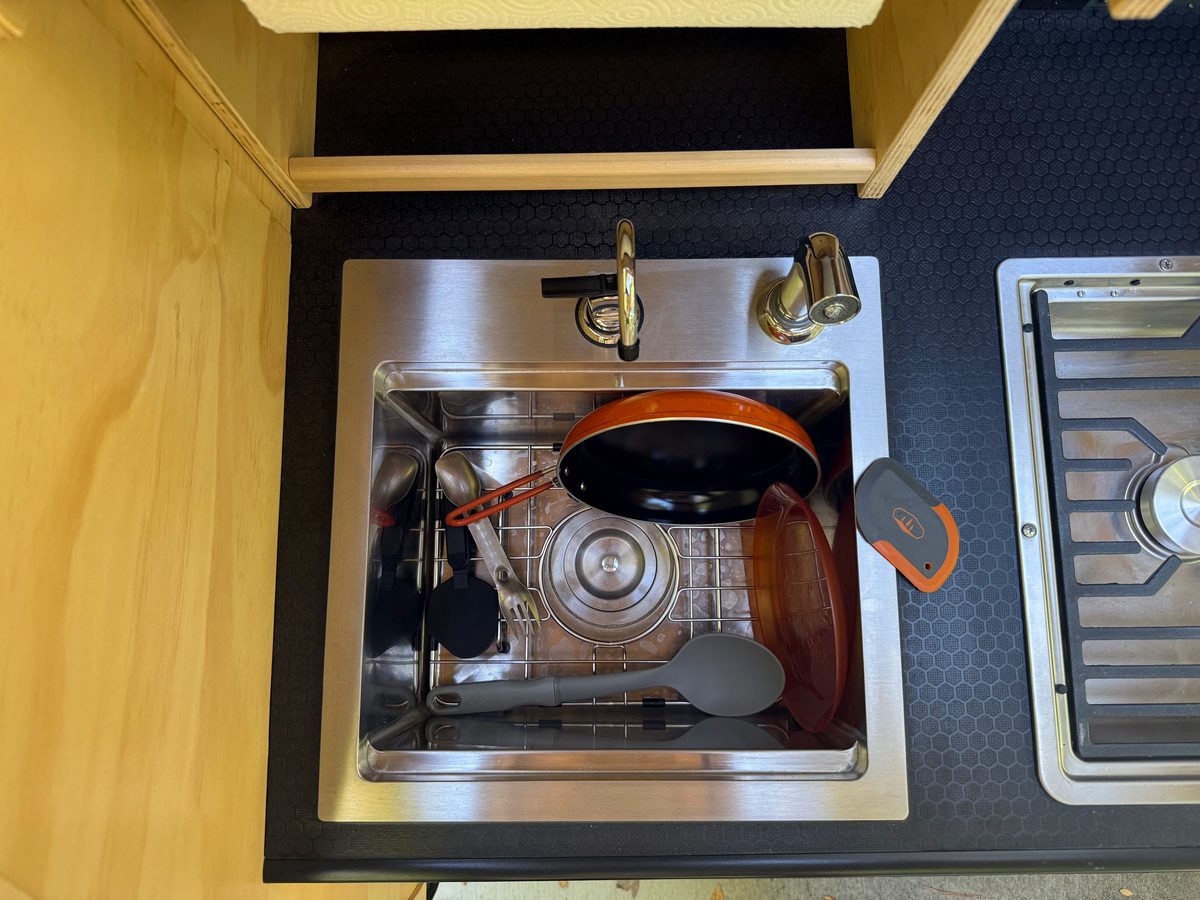
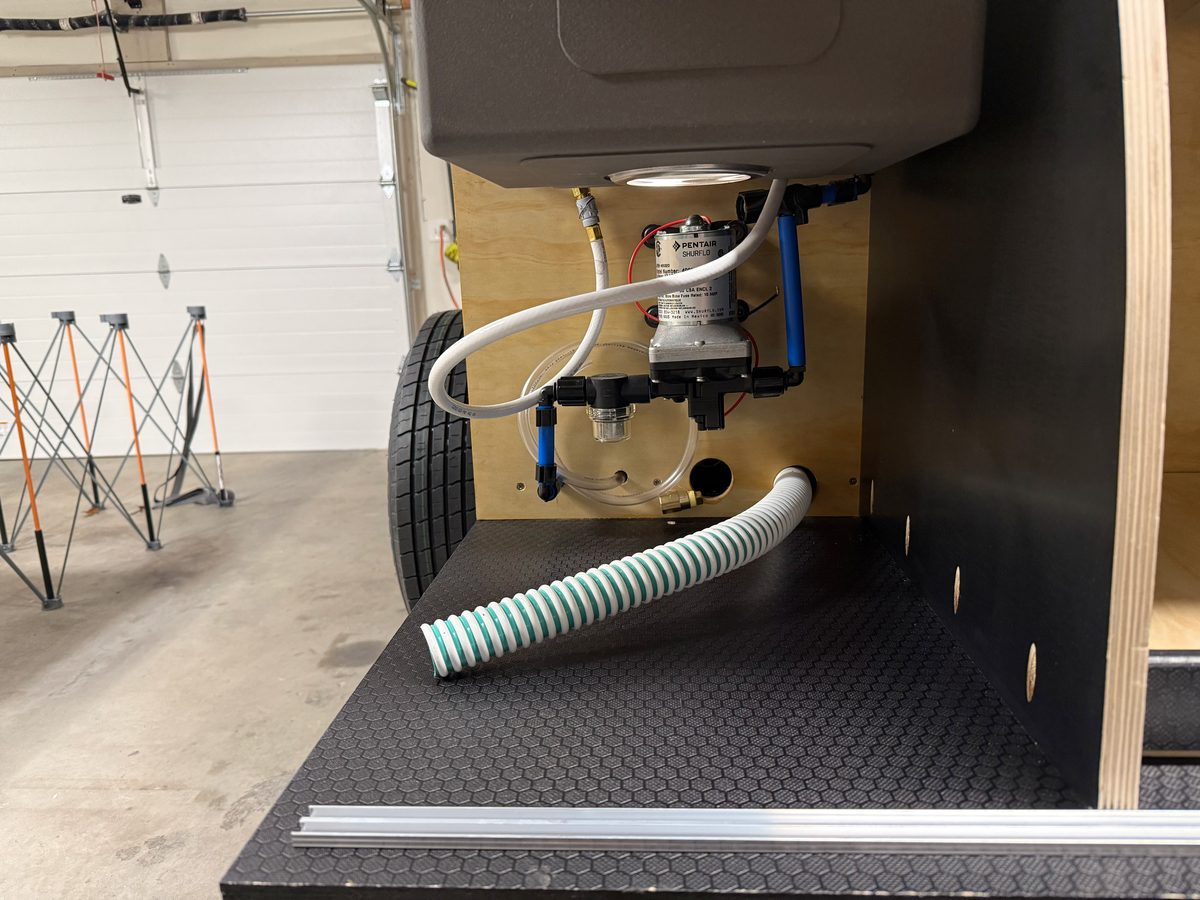
Camping the Smokies?
Every campground in the park is dry camping. My Elkmont guide covers what's there, what isn't, and how to camp it fully self-contained.
Read the Elkmont GuideShop This Post
The pump is the same brand as the one under my sink. The rest is what I'd point anyone at for filling, filtering and carrying water to a dry site.
Disclosure: KnoxDrops is a participant in the Amazon Services LLC Associates Program. As an Amazon Associate we earn from qualifying purchases — if you buy through a link on this page, it costs you nothing extra.
← Back to Blog