Winterizing a Teardrop in East Tennessee.
We get a long warm fall here in East Tennessee, which is exactly why people get caught. The first freeze usually shows up around the start of November, often while the leaves are still worth driving to see, and water still sitting in a pump or a low spot in a line expands with enough force to split fittings you won't find until spring. Here's what actually breaks, the afternoon of work that keeps it from happening, and what to do about the battery while you're at it.
When to Do It Here
October here doesn't feel like the end of anything. The afternoons are still warm, the leaves are just getting good, and the campgrounds have emptied out. That's exactly why it's easy to put this off a couple of weeks too long.
The National Weather Service puts the median first freeze at the Knoxville airport on November 2, from its 1991–2020 normals, and the median first frost on October 24. Median means half of years it comes sooner than that. That's also at the airport. A campsite up in the park sits higher and freezes before your driveway does, which matters if you're camping in the mountains late in the fall.
So watch the forecast, not the calendar, and do the water system before the first night under 32°F, not after. In most years that means the end of October. You can still camp after that, you just drain it every time you get home. The battery and storage steps can wait until you're really done for the season. The plumbing is the only part that's in a hurry.
What Freezing Actually Breaks
Water expands about nine percent when it freezes, and it does it with enough force to split brass, no matter how nice your fittings were. In a teardrop the damage shows up in a few predictable places, and the tank everybody remembers to drain usually isn't one of them.
The Pump
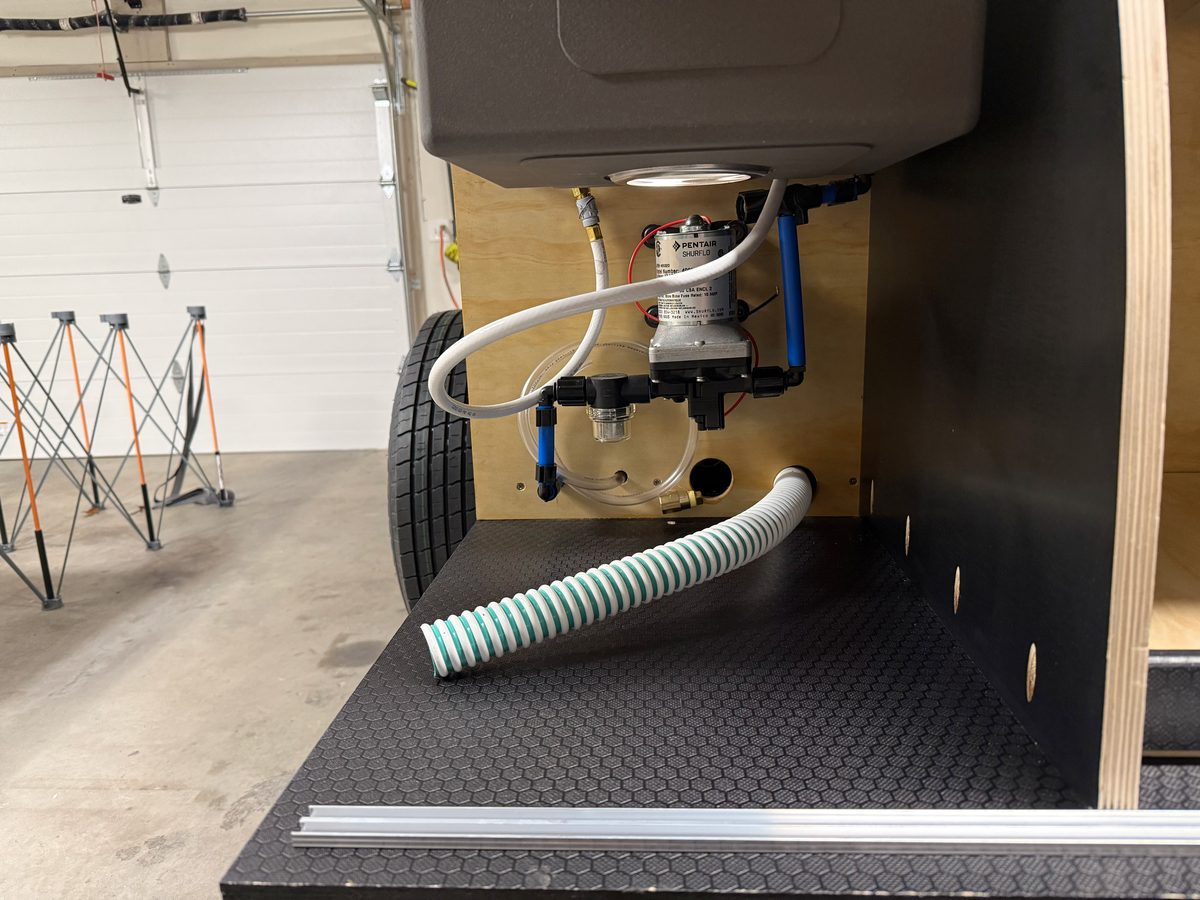
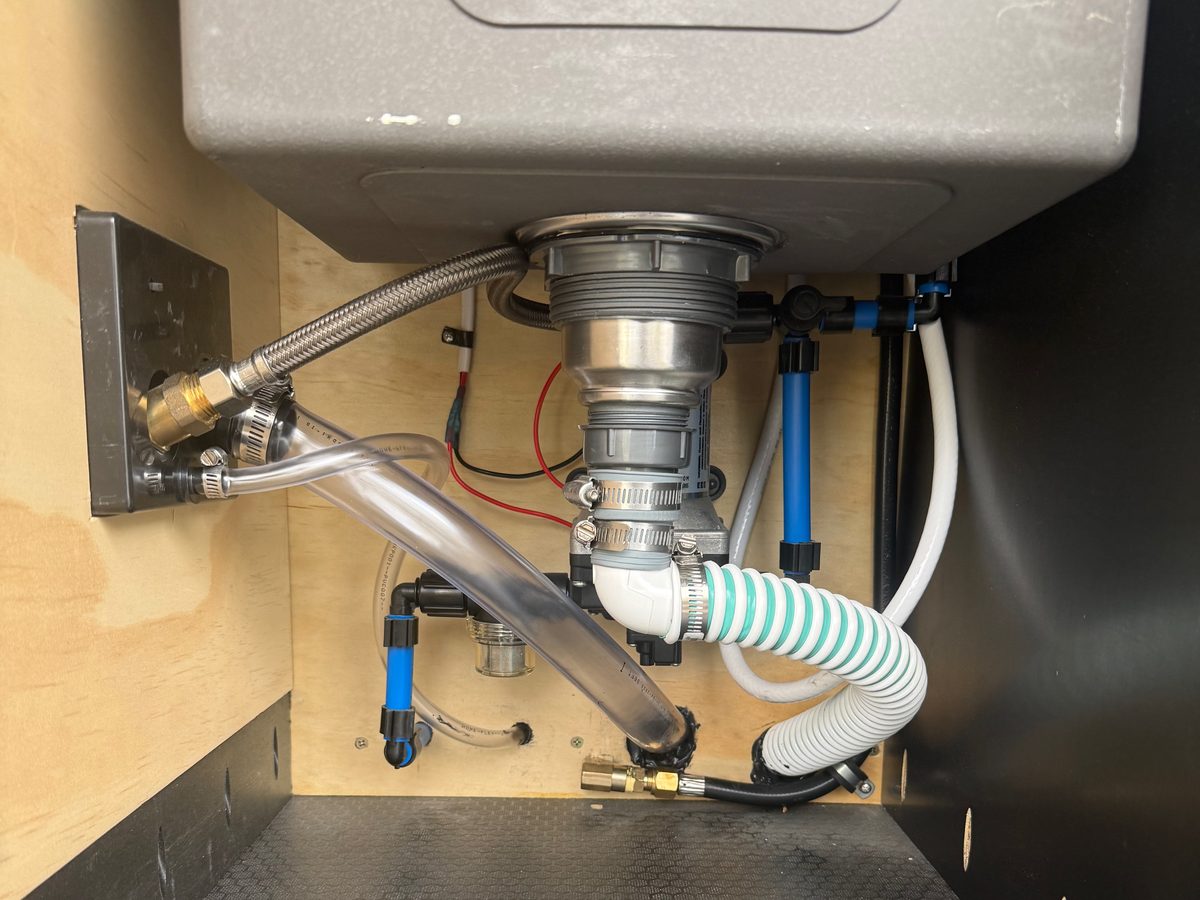
The one that breaks most. A 12V pump like my SHURflo holds water inside the head after the lines look empty, and a cracked pump body is a new pump.
Low Spots in Lines
Any sag in a run holds water after the rest has drained. You can't see them, and they're where the splits happen.
The Faucet
The cartridge traps water in passages you can't see or reach. Open it up and leave it open.
Filters and Strainers
An inline filter housing is a little water tank of its own. Empty it or pull it.
The Gray Trap
If there's a P-trap under the sink, it holds water on purpose. That's its whole job, and that's the problem. The gray tank needs emptying too.
Anything Outside
An outdoor shower fitting, a quick-connect on the outside, or tanks hung under the frame like mine freeze before anything inside the cabin does.
Draining, Then Antifreeze
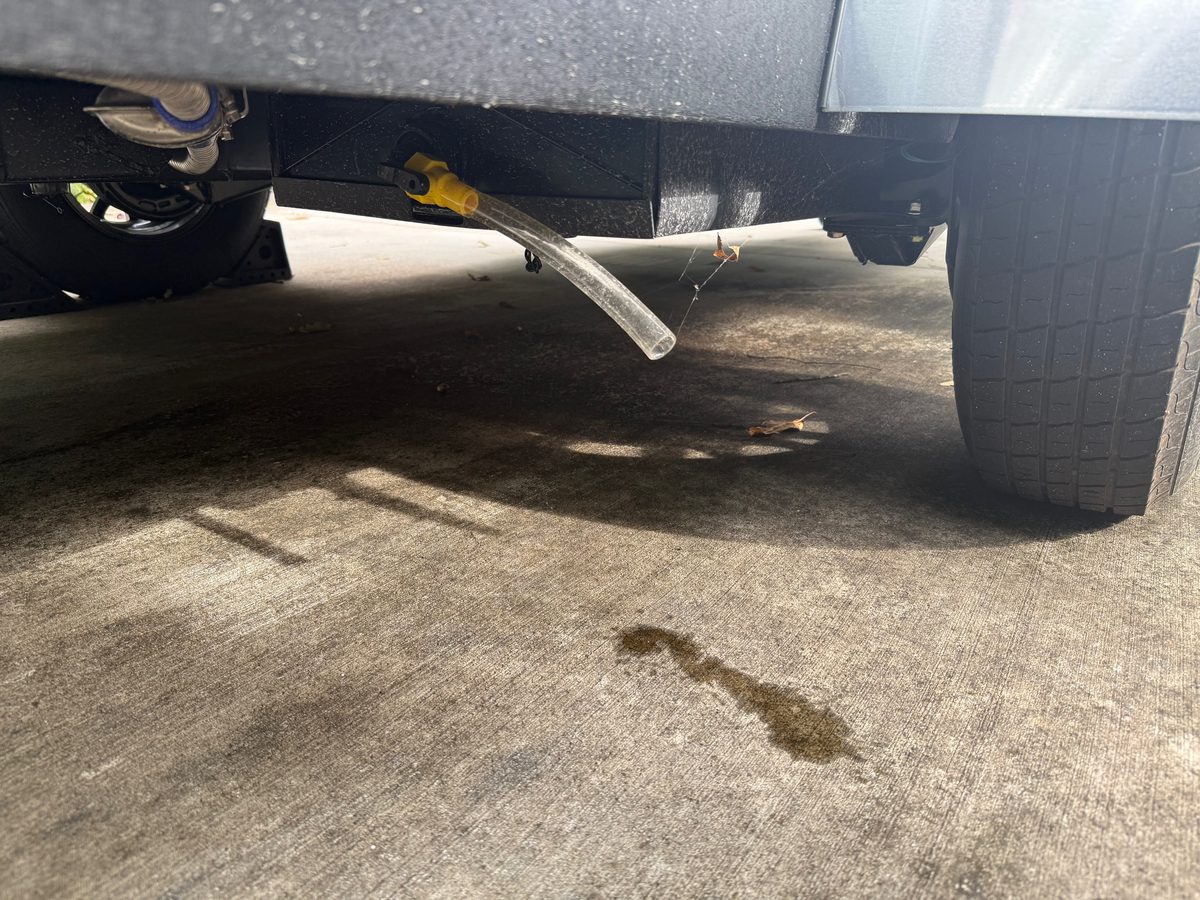
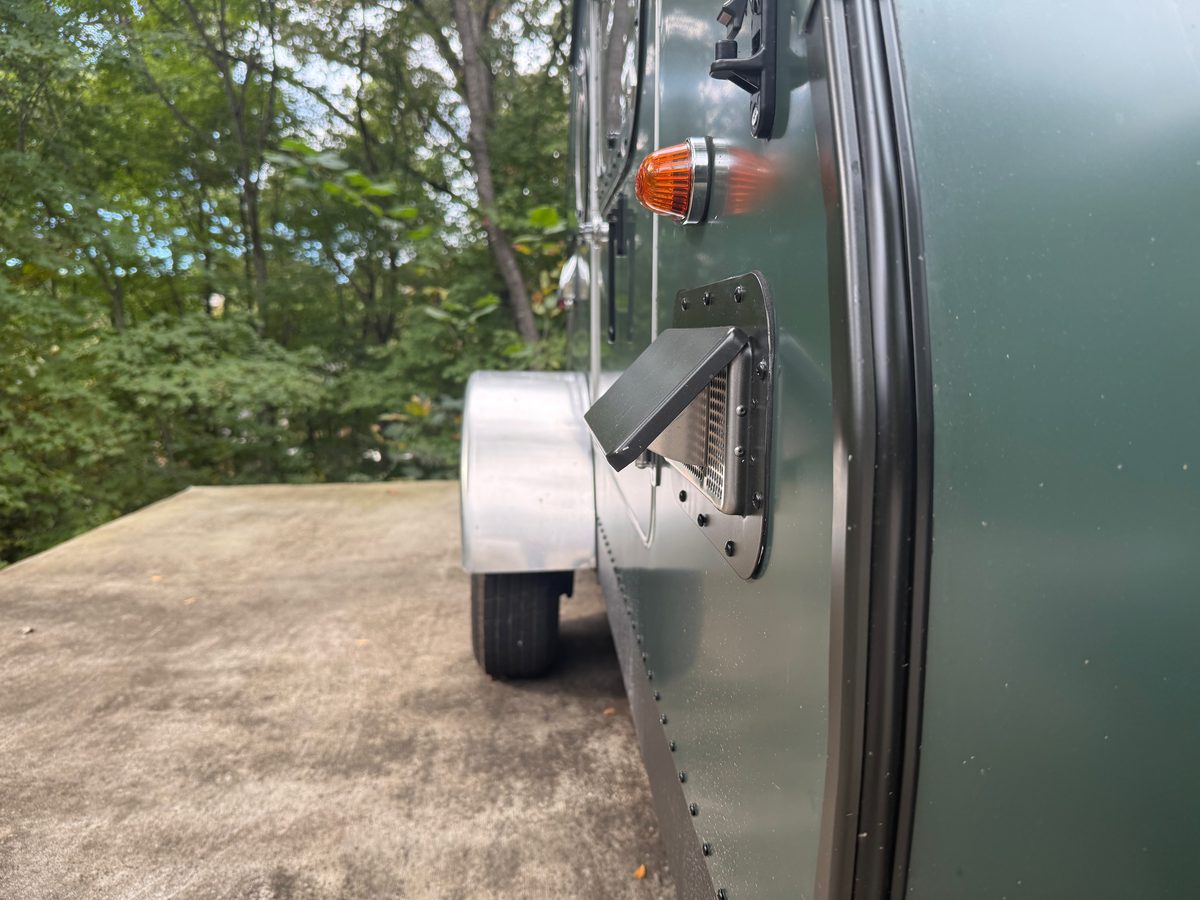
My water system is simple: two 9 gallon Valterra tanks, fresh and gray, in aluminum pans under the galley end of the frame, a SHURflo pump, and a sink with a P-trap. Water gets in two ways: a fill opening I can pour into with a funnel, and a city water hose connection that bypasses the pump and runs on the hose's pressure. Both have plumbing behind them, so both need clearing. Each tank has a fitting on the bottom side, and those are the low points, so with them open everything in the tank comes out. I drain it all first, then put RV antifreeze through it, because draining alone still leaves water sitting in the pump head and the trap.
1. Level It and Drain
Get the trailer roughly level, then open the bottom fittings on the fresh and gray tanks. On mine those are the low points, so everything drains. Empty the gray somewhere legal.
2. Run the Pump Dry
Run it briefly with the faucet open until it's pushing air. Don't let it run long once it's dry, since you're clearing it, not testing it.
3. Antifreeze in the Fill
Close the fittings on both tanks back up, then pour RV antifreeze in through the fill opening with a funnel, so there's some in the fresh tank for the pump to pull from.
4. Pump It Through
Run the pump with the faucet open until it comes out pink. That's what protects the pump head and the lines.
5. The City Water Inlet
Put antifreeze in through the city water inlet too. It bypasses the pump, so those lines never see what you just pumped through, and they freeze just the same.
6. Some Down the Drain
Pour some down the sink so the P-trap sits full of antifreeze all winter instead of water, and the rest ends up in the gray tank. Holding liquid is the trap's whole job, and that's the problem.
Use the RV kind. It's the pink stuff, it's made for drinking water systems, and it's cheap. Don't put automotive antifreeze in anything you'll drink from later, no matter what it costs.
The Battery Is the Other Half
This is the part that gets missed on a newer build, because a lithium battery acts differently in the cold than the lead-acid batteries most of the old advice was written for. Mine is a Renogy Core Mini 300Ah LiFePO4 in an aluminum box under the bed, charged by two 100W panels through a Victron SmartSolar 75/15.
LiFePO4 discharges fine in the cold. Charging it below freezing is what does the permanent damage, and the battery won't tell you about it at the time. A sunny December morning with the solar controller pushing current into a battery sitting at 25°F is exactly how cells get quietly ruined over a winter in storage.
Mine takes care of that on its own. Renogy's spec has the Core Mini's battery management system cut off charging at 32°F, and it won't start charging again until the battery is back up to 41°F. It'll still discharge down to -4°F. The SmartSolar has a low-temperature cutoff setting too, but Victron ships it turned off, and it only works when the controller is getting a battery temperature from a Smart Battery Sense or a battery monitor with a temperature sensor. If your battery doesn't protect itself, that setting or disconnecting the solar is the fix.
Check for a Low-Temp Cutoff
A lot of lithium batteries have one built in and just refuse the charge, like my Core Mini does. Look it up for yours instead of assuming.
Or Disconnect the Solar
The simplest fix if there's no cutoff. No charging, no cold charging problem. On mine that's a separate inline solar breaker, since the kill switch doesn't touch the solar.
Store It Part-Charged
If it's going to sit with nothing charging it, lithium likes to sit around half to two thirds charged instead of full. Check what the manufacturer says for yours.
In or Out
Mine stays in the trailer with the kill switch off. The kill switch doesn't cut the solar, so the panels keep charging it on warmer days, and on a cold morning the battery refuses the charge by itself. If yours lifts out easily and has no cutoff, a shelf in the garage solves everything.
Kill the Parasites
Shunts and control boards draw a trickle for months. Turn off the battery kill switch, or the battery shows up to spring flat.
Check It Midwinter
One look at the battery in January costs nothing and catches a slow drain before it turns into a dead battery.
Propane, Fridge and the Rest
The water and the battery are the two that cost real money. The rest is a short list that takes about twenty minutes and saves you a lot of annoyance in the spring.
About mice. A teardrop is a warm dry box in a cold field, and they will try. Stuff steel wool in any opening you can find, leave no food of any kind inside, and take a look once in the middle of winter. They'll do a lot more damage to your wiring than the cold ever will, and they don't care how long it took you to get it all neat.
The Ones That Catch People
Most of those come down to the same thing. The obvious part gets taken care of, and the thing holding a cup of water somewhere you can't see is what actually breaks. If you're not sure, open it up and leave it open.
Where It Sits All Winter
Where the trailer sits for five months does more for it than most of the checklist does, and it's a decision you make once instead of a job. Mine lives outside under a cover most of the winter, and goes in the garage when the weather's going to be extra nasty.
Indoors, If You Can
A garage or barn takes care of sun, freeze and thaw, and standing water all at once. Not everybody has one, but it's worth a lot, even if it's only for the worst weeks.
Off Wet Ground
Gravel or concrete instead of grass. A trailer sitting on soft wet ground all winter is hard on the frame and the tires both.
Nose Slightly High
Water runs off the roof instead of pooling, and anything you missed in the plumbing drains toward the end you picked.
Covers Cut Both Ways
A breathable cover sheds water and sun. A tarp traps moisture against the skin and can do more harm than leaving it bare.
Mind the Trees
Sap, falling limbs, and shade that never lets the roof dry out. Open sky is usually better than a handy tree, and the solar panels on the roof will agree.
Chock and Level
Chocked, and level side to side so nothing sits in standing water. Run the tongue jack down onto a block so it isn't sitting in the mud.
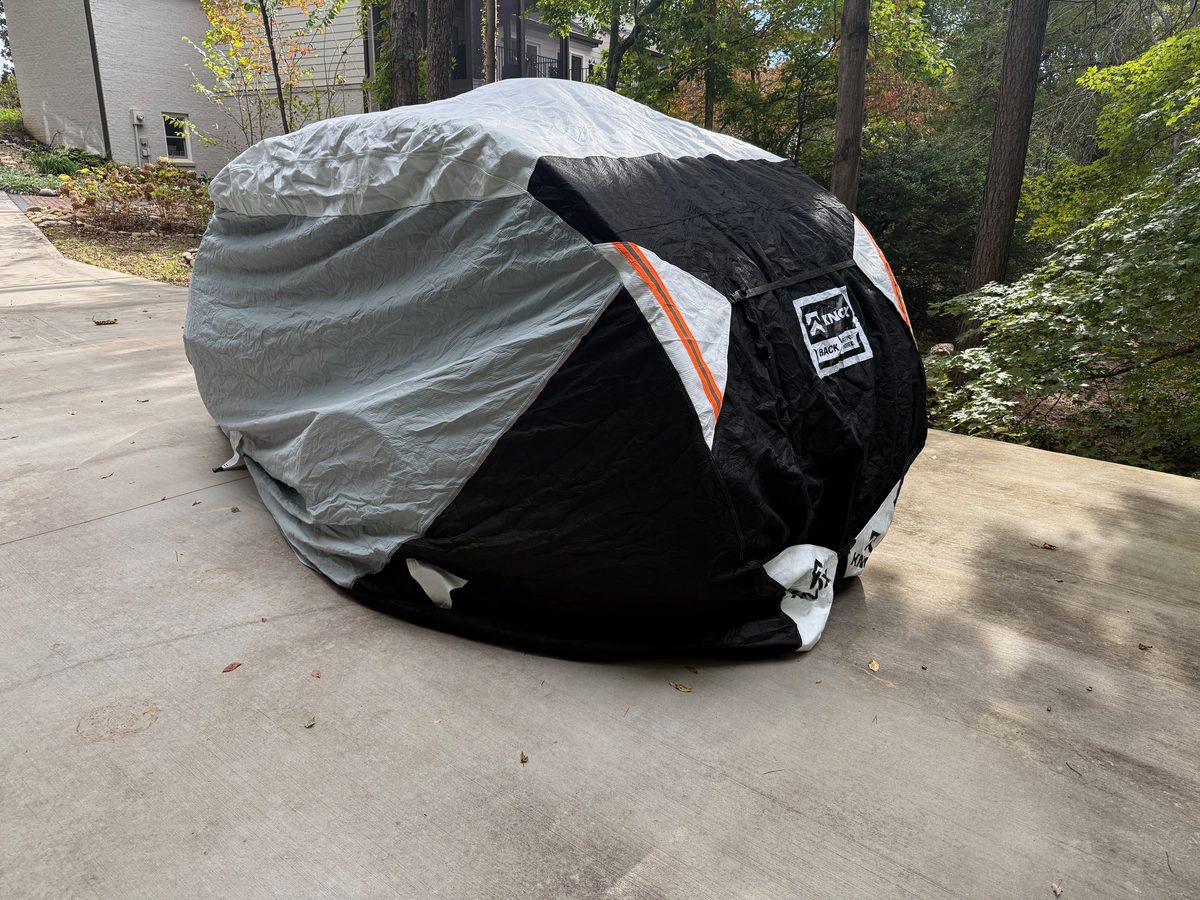
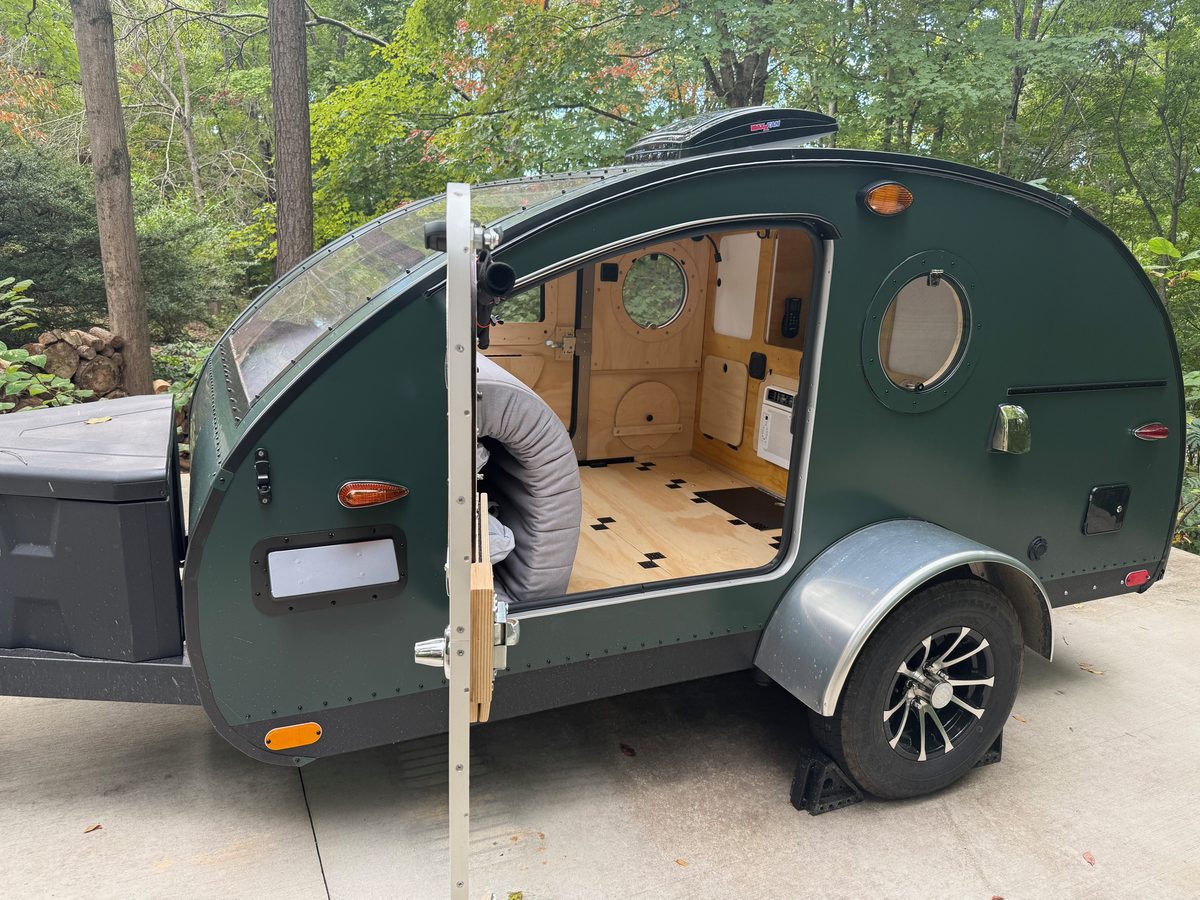
If your trailer lives outside, and most do, the best habit is walking out to it once in the middle of winter. Ten minutes checking for a leak, a mouse, or a cover that's come loose is worth more than anything else here, because every one of these problems is cheap in January and expensive in April.
If You Camp Through Winter Instead
Not everybody puts the trailer away, and the Smokies in winter are worth it, with empty campgrounds, no bugs, and a kind of quiet you don't get in July. Some winters I skip winterizing and keep camping.
On a trip, the heat from the cabin keeps things warm enough most days that the plumbing doesn't freeze. A room-sealed heater like my Propex HS2000 is what makes that work. If the forecast calls for a really hard cold night, we skip the plumbing and use water bags instead.
Between trips, I blow the water out of the system with air so nothing is sitting in the lines, and the trailer stays in the garage. There's an adapter for that, a blow-out plug that screws onto the city water connection on one end and takes an air chuck on the other. Keep the air pressure low. You're pushing water out, not testing how much your lines can take. The pump and the lines are the parts that split, and keeping them empty and indoors between trips means a cold snap in the middle of the week never catches the trailer with water in it.
Put Away for the Season

Spring, in Reverse
Camping Through the Cold?
A room-sealed propane heater and a battery sized for long winter nights are what make that comfortable instead of something to get through. My free wiring diagram builder will help you lay out the electrical side.
Open the Wiring Diagram BuilderShop This Post
None of this is expensive, which is the whole argument for doing it.
Disclosure: KnoxDrops is a participant in the Amazon Services LLC Associates Program. As an Amazon Associate we earn from qualifying purchases — if you buy through a link on this page, it costs you nothing extra.
← Back to Blog